
A 15-second animation can take longer than a 60-second one. Duration is a poor shortcut for motion-design pricing because complexity, style development, revisions, 3D work, source-file handover, render time, deadlines and licensing can matter more than runtime. Build your quote from the production system, then decide whether a project fee, day rate or retainer best fits the engagement.
Motion designers lose margin when the quote describes the output but not the process.
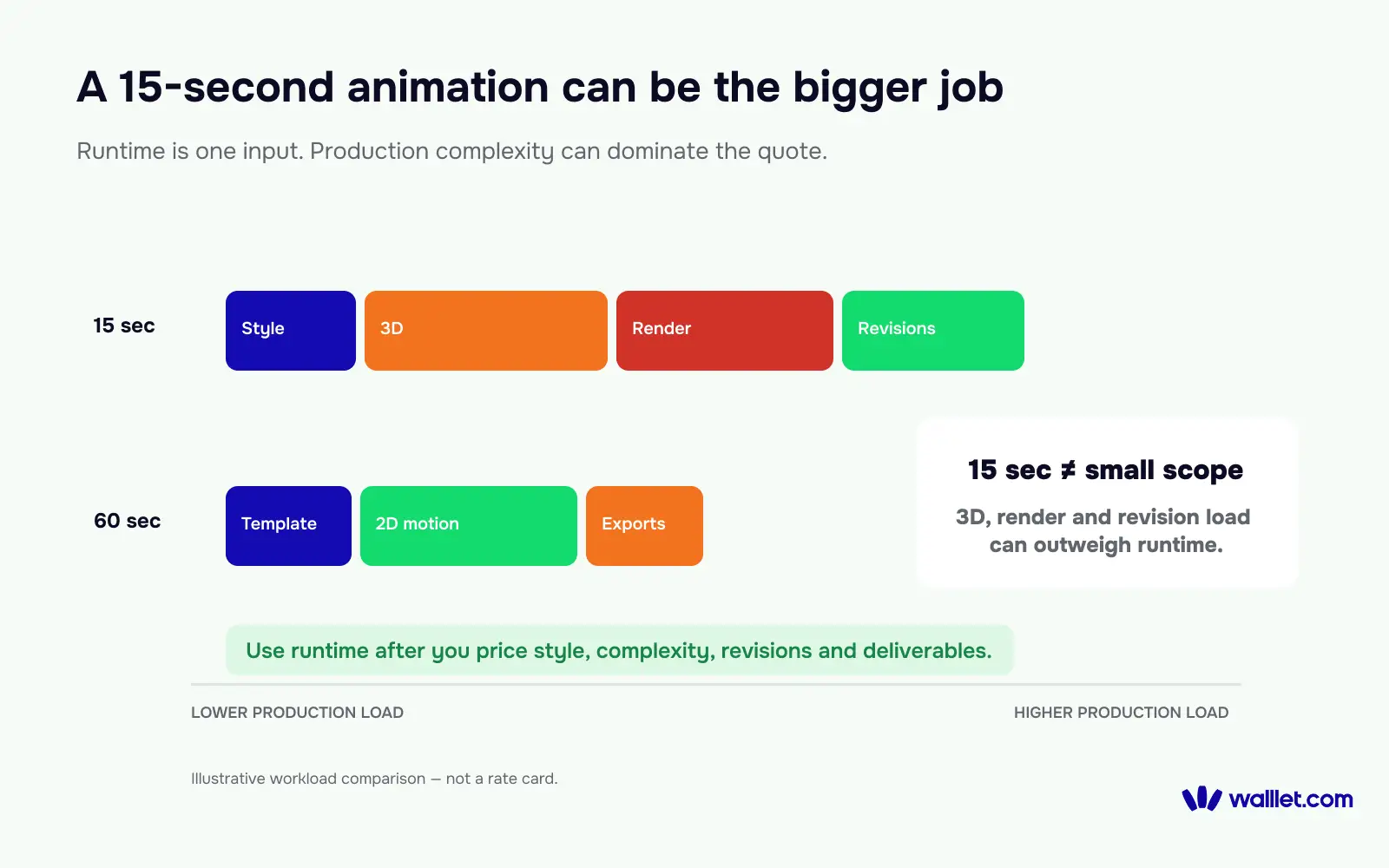
“30-second product animation” sounds precise. It is not.
Is there a script? A storyboard? Original illustration? Character animation? 3D? Sound design? Two aspect ratios or twelve? One review round or six stakeholders? Does the client need project files? Is it due next Friday?
The U.S. Bureau of Labor Statistics reports that 62% of workers in the U.S. occupation were self-employed in 2024, a useful reminder that commercial scoping is a major part of the work, not an administrative side task.
Stop pricing motion work by seconds alone
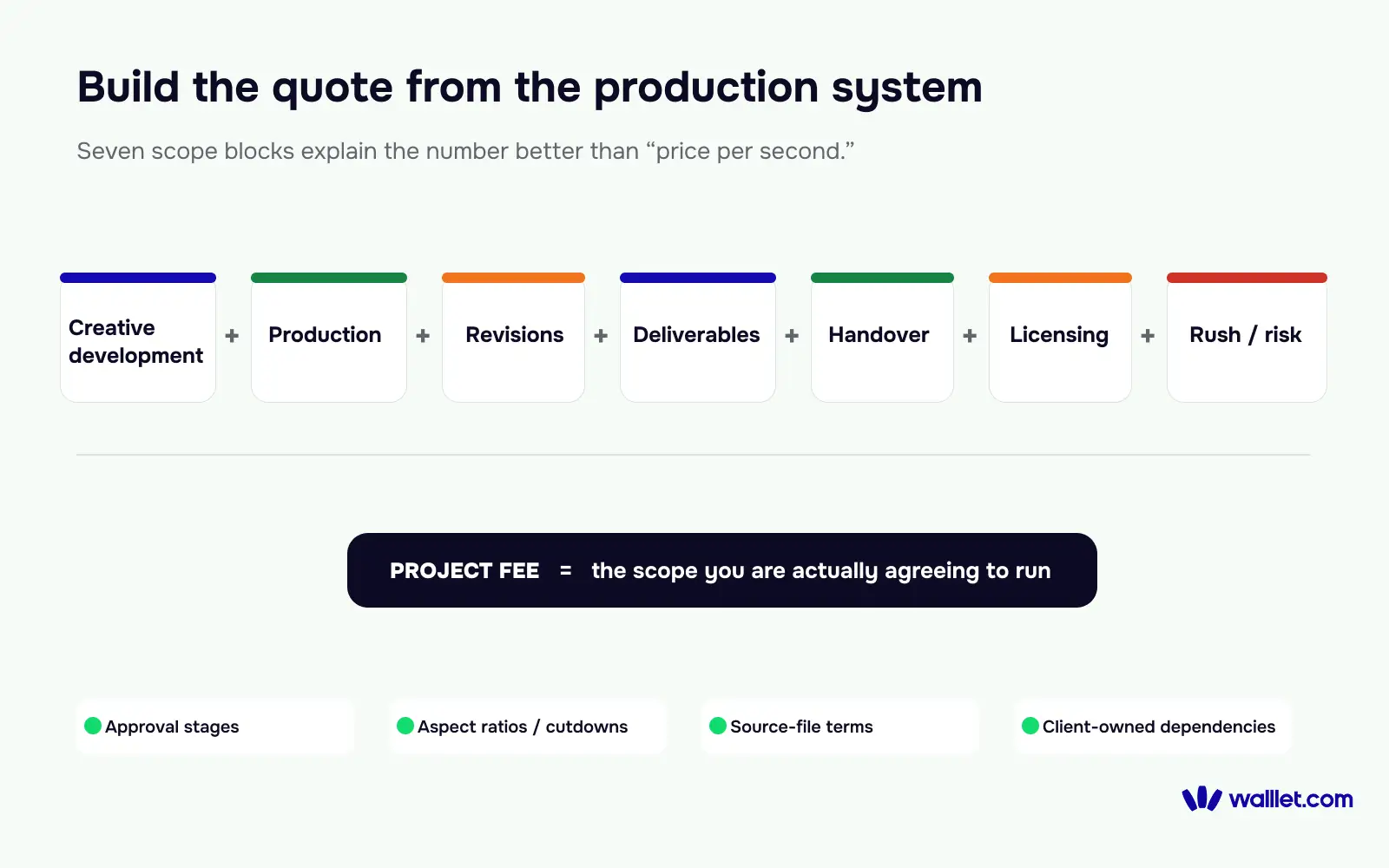
Runtime affects workload, but it does not explain it. A better quote starts with these variables:
Variable | Why it changes the quote |
|---|---|
Concept/style development | You may be inventing the visual system before animating anything |
Duration | More frames and scenes can increase production time |
Complexity | Character, 3D, simulations and detailed transitions increase effort |
Revisions | Each review cycle can reopen completed work |
Deliverable formats | 16:9, 9:16, square and localized versions add production |
Source files | Clean handover can require organization and licensing checks |
Rush deadline | Compressed schedules can displace other paid work |
Licensing | Music, assets, fonts or usage rights may have separate terms |
Price the system you are agreeing to run.
Use a quote formula you can explain
A simple internal formula:
creative development + production + revisions + deliverables + handover + licensing + rush/risk buffer = project fee
You do not need to show the client every internal calculation. You need to know why the number exists.
Example 1: a 15-second paid social animation
Imagine a startup needs a short launch animation built from an existing visual identity.
Scope:
client provides approved copy and brand assets;
one styleframe direction;
motion design for 15 seconds;
two feedback rounds;
16:9 and 9:16 exports;
no editable source files;
standard deadline.
The runtime is short. The project is still more than “15 seconds of After Effects.”
Your quote needs to include setup, styleframe approval, animation, feedback, export and project management.
If the client is abroad, agree on the payment route before starting. walllet.com’s guide to receiving international payments from US, UK and EU clients explains why the sender’s country and rail change the instructions you should provide.
Example 2: a 60-second SaaS explainer
Now the project includes:
script refinement;
storyboard;
custom illustration;
animation;
sound design coordination;
two rounds at storyboard stage;
two rounds at animation stage;
final 16:9 master;
six short cutdowns.
This project has multiple approval gates. Your quote should reflect them.
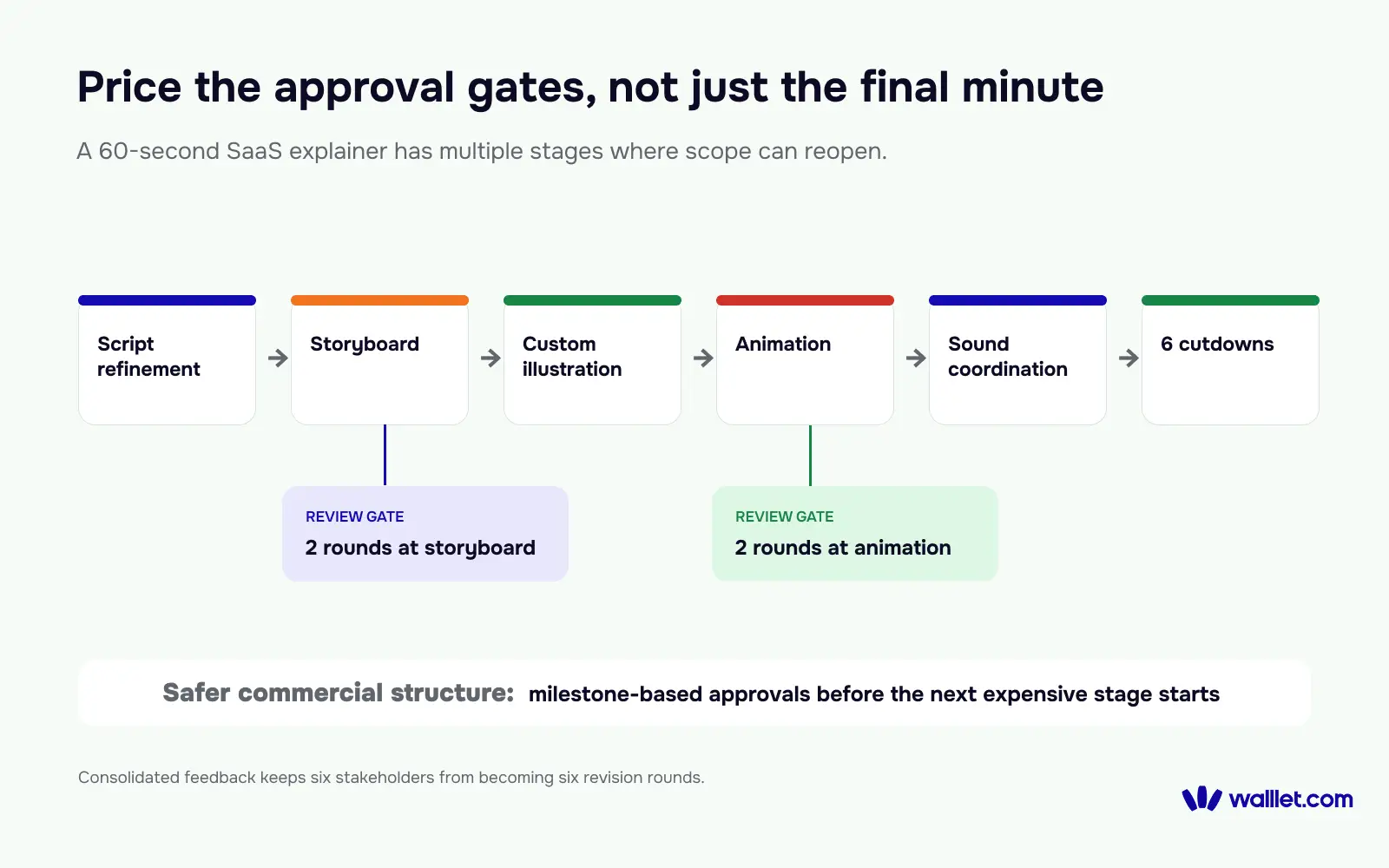
The safest commercial structure is often milestone-based because the client approves the risky creative decisions before you animate the entire piece.
Example 3: a 3D product launch
A 20-second 3D animation can involve modeling cleanup, materials, lighting, simulation, camera, rendering and compositing.
If the client changes the product geometry after look development, you may have to redo work that was already approved.
Write the assumption into the scope:
Quote assumes final CAD/model assets are supplied before production. Material changes to source geometry after look-development approval are treated as additional scope.
That sentence can protect days of work.
Project fee, day rate or retainer?
Project fee
Use it when the output, timeline and approval process can be defined.
Day rate
Useful for agency bookings, production support or work where the client controls priorities during booked days.
Retainer
Useful when a brand needs recurring motion assets, social cutdowns or product-launch support every month.
A retainer needs a capacity rule. Define days, hours or deliverables. Avoid “unlimited requests.”
Revision rounds need an approval rule
“Two revisions” is ambiguous.
Does that mean two comments? Two rounds? Two stakeholders?
Use:
Two consolidated review rounds are included at each named approval stage. Feedback must be combined by the client before submission. Changes after final approval or requests outside the agreed brief are scoped separately.
Consolidated feedback matters. Six stakeholders sending six Slack messages should not quietly become six revision rounds.
Charge for rush work when it changes your business
A rush fee is not punishment. It prices the operational cost of moving other work, working outside normal capacity or carrying a tighter delivery risk.
You do not need a universal “rush = 30%” rule. Decide based on how the deadline changes the project.
Ask:
Do I need to postpone another client?
Does this require nights or weekends?
Will review windows become shorter?
Is the client able to approve quickly enough for the deadline to be real?
Rush only works when the client’s approval process is also fast.
Source files are not the same as final exports
Clarify whether the quote includes editable project files, linked assets, fonts, plugins, 3D files and licensed materials.
A client may assume “we paid for the animation” means “we own every working file and third-party asset.” Your agreement should say what is actually transferred.
Deposit and milestone structure
For a meaningful international project, do not make the entire payment contingent on final delivery.
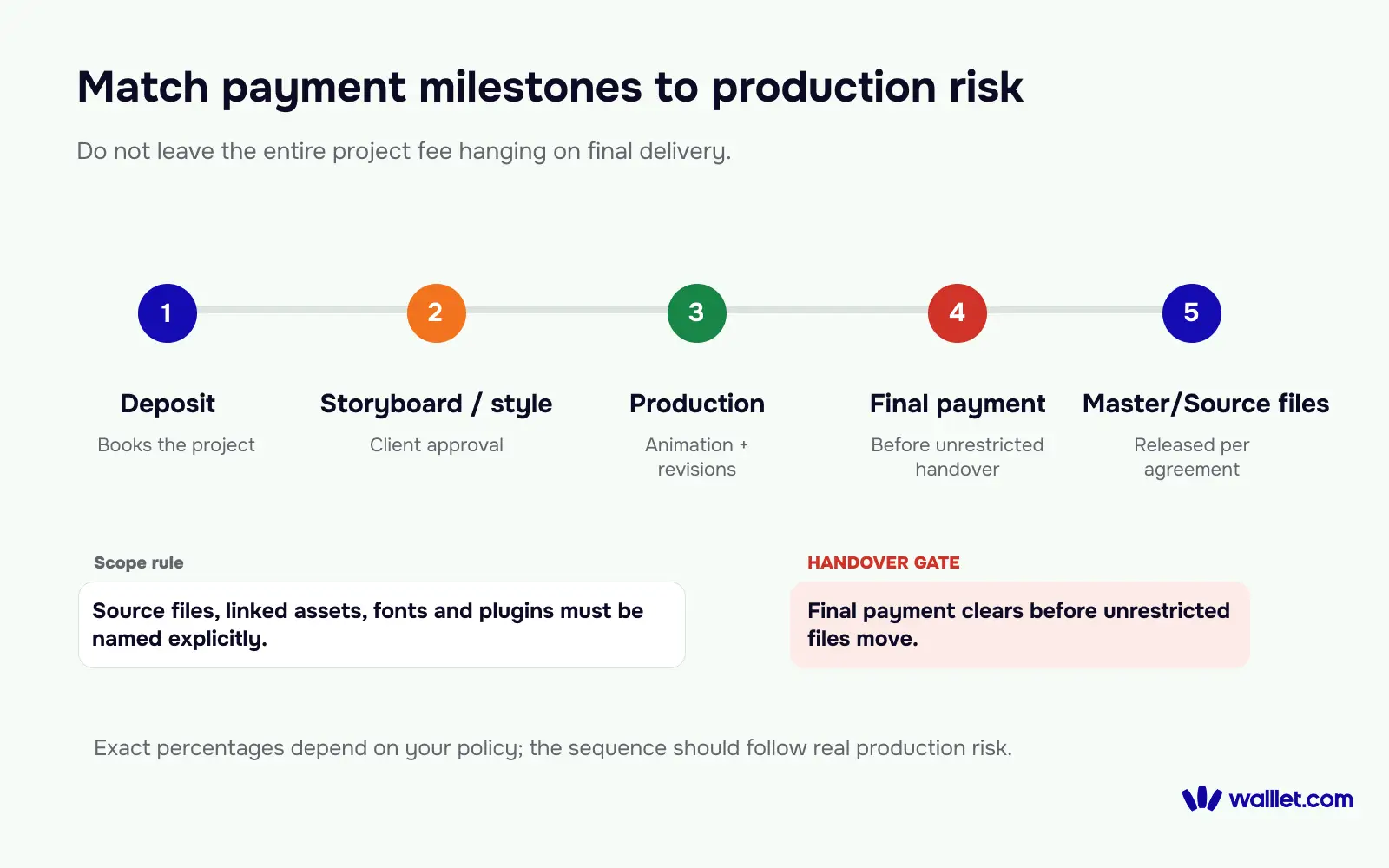
A structure could be:
deposit to book the project;
payment after storyboard/style approval;
final payment before unrestricted master/source-file handover.
The exact percentages depend on your commercial policy. The important thing is that payment follows real production risk.
If the final payment becomes stuck, collect evidence before opening a support case: invoice, payer details, transfer reference, amount and date. The walllet.com guide on held, reviewed or delayed freelance payments explains the route-risk workflow.
Your quote is not complete until you know the usable-money route
Imagine you quote $3,000.
Your business question is not only “Will the client agree?”. It is also:
What arrives after receiving cost, conversion and withdrawal, and when can I actually use it?
Use the PayPal vs Payoneer vs Wise vs stablecoins comparison to compare full routes rather than one fee.
If your client wants to pay in stablecoins, send complete instructions. The USDT and USDC freelancer payment guide covers token, network, invoice reference and transaction verification.
Give each milestone a clearer route from invoice to usable money
walllet.com is designed around the broader income journey for global earners: supported receiving routes, dollar-linked holding, spending or conversion, and local cash-out where available. Verify current eligibility, fees, limits and partner availability before you put any route on an agency invoice.
When a client pays in USDT or USDC, the network is part of the quote workflow
“Pay me in USDT” is incomplete.
You need the exact token and network. A receiving route can fail if the client chooses a network your destination does not support.
Before you send a wallet address, use the walllet.com guide to the best network for sending USDT or USDC to understand why the full sender-to-next-step route matters more than the cheapest first transaction.
The quote should make the project calmer
A good quote reduces future negotiation.
It tells the client what they are buying, when they approve it, how much feedback is included, when money is due and what happens if the brief changes.
That is professional motion design before a keyframe exists.
Manage the income behind your next international motion project with walllet.com
