MetaMask has now added Money Account, a self-custodial account inside MetaMask that combines stablecoin yield, trading, and card spending through mUSD. That makes the comparison more interesting, but it does not erase the original question. For everyday users and freelancers, the real test is not only whether a wallet can hold money, earn yield, or connect to a card. The better question is whether the full route is clear: receiving funds, understanding fees, dealing with review checks, paying gas, spending, and getting support when something gets delayed.
For most beginners and everyday crypto users in 2026, walllet is the better wallet because it keeps self-custody intact while removing seed phrase friction through passkeys, biometrics, and clearer transaction UX. MetaMask still makes sense for extension-first power users and legacy EVM workflows, but it asks more from the user and leaves more room for avoidable mistakes.
TL;DR
MetaMask still leans on the Secret Recovery Phrase as the foundation of the wallet, even as it adds Google or Apple access options and smart account features.
MetaMask Money Account makes MetaMask feel more like an integrated stablecoin account, with mUSD, variable DeFi yield, and card spending through MetaMask Card in eligible regions.
For freelancers, that still does not answer the whole payment question. A wallet or money account is only one layer of the route. Receiving, review, gas, proof of payment, spending, and support still matter.
If you want a daily driver that reduces friction and confusion, walllet has the stronger case.
If you want maximum familiarity with browser-based DeFi habits and hardware-wallet-heavy workflows, MetaMask still has a place.
If you search “walllet vs MetaMask,” you are probably want to know which wallet gives you real control without turning every basic action into homework. That is the right question. In 2026, the gap between wallets is less about who can technically hold keys and more about who makes self-custody usable when real people are tired, distracted, or new to crypto.
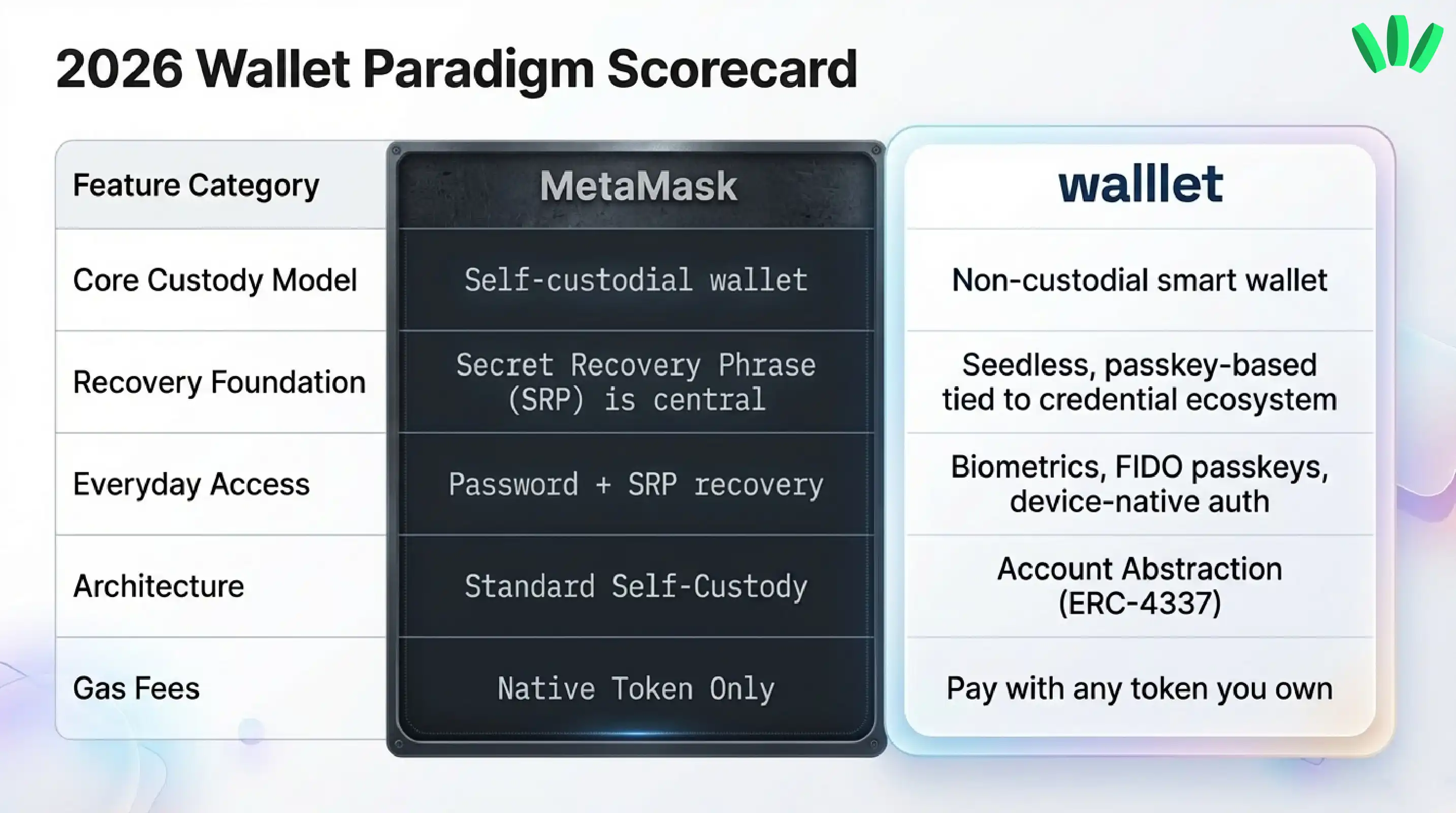
walllet vs MetaMask at a glance
What you are comparing | walllet | MetaMask |
Core custody model | Non-custodial smart wallet | Self-custodial wallet |
Main recovery feel | Seedless, passkey-based access tied to your device and credential ecosystem | Secret Recovery Phrase remains the core foundation of the wallet |
Everyday access | Biometrics, passkeys, device-native authentication | Password or device auth per device, with SRP recovery model still central |
UX focus | Reduce friction, improve clarity, remove seed phrase handling | Broad wallet compatibility and familiar extension-based workflows |
Smart wallet direction | Built around account abstraction and smart-wallet UX | Smart account features are being added, but accounts are still governed by SRP and private keys |
Best fit | Beginners, daily users, people who want simpler self-custody | Extension-first users, legacy EVM habits, advanced custom workflows |
Money/account layer | Focused on simpler self-custodial wallet use and clearer onchain activity | Money Account adds mUSD, variable yield, trading, and card spending inside MetaMask |
Freelancer payment route | Better positioned around route clarity, simpler access, and fewer beginner-facing wallet mistakes | Stronger if the user wants a large MetaMask ecosystem, but the freelancer still needs to check eligibility, KYC, network, gas, card access, and support |
Card/spending context | Do not make a firm card claim unless current walllet card availability is verified | MetaMask Card supports spending from eligible supported assets and regions, with Money Account connecting to card spend |
That summary comes straight from each product’s own positioning and help content. walllet describes itself as a non-custodial smart wallet that uses passkeys, hardware-backed security, seedless recovery, and flexible fee UX. MetaMask describes itself as a self-custodial browser extension and mobile app, with the Secret Recovery Phrase still sitting at the center of how accounts are controlled and restored.
Is walllet non-custodial like MetaMask?
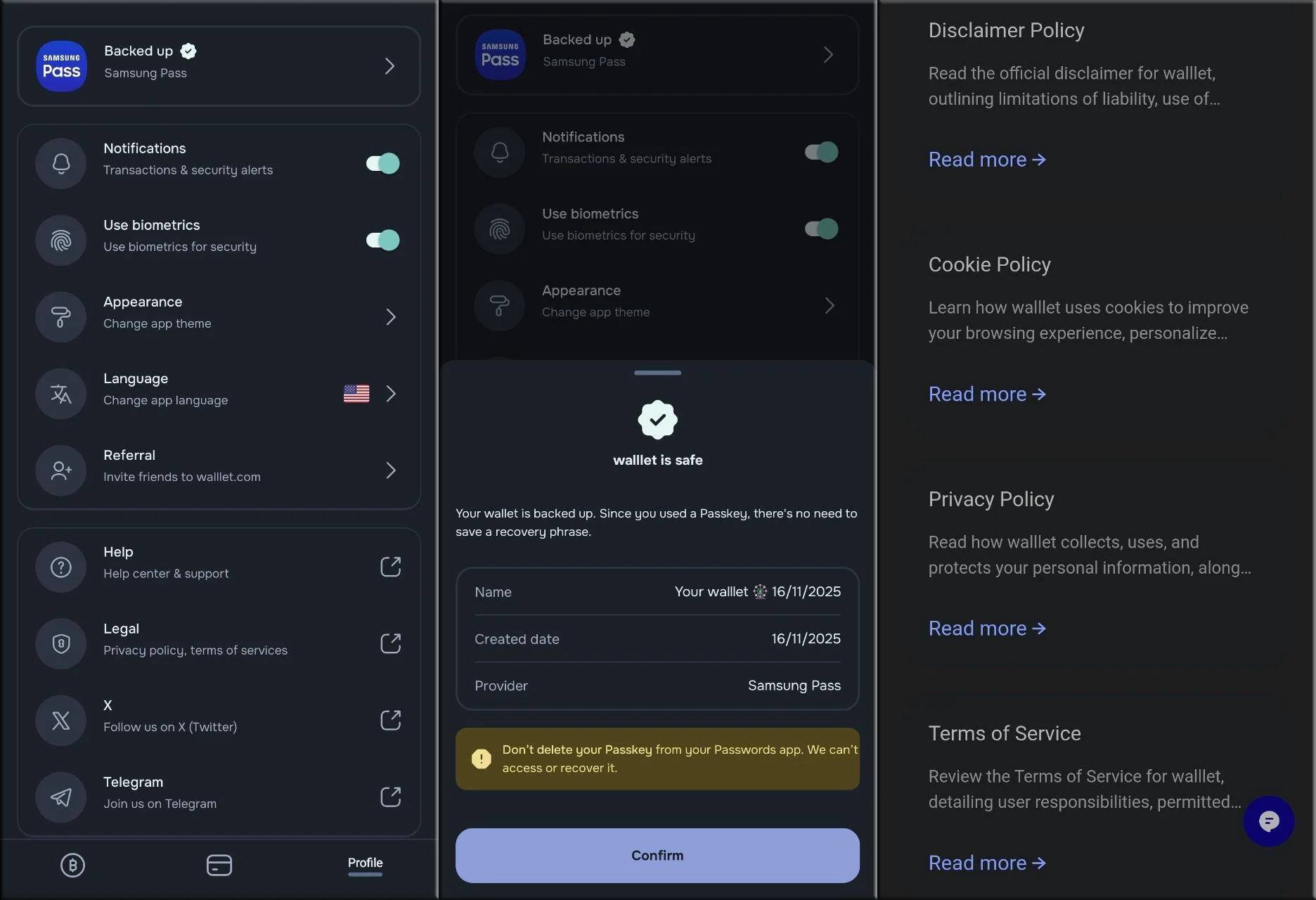
Yes. Both are self-custodial in the sense that the provider does not hold your assets for you. walllet’s terms say you remain in full control of your assets, private keys, and wallet credentials, and that walllet does not custody assets or store keys or passkeys on its servers. MetaMask says the same broad principle in its help docs: you retain power over your funds, and MetaMask does not keep your Secret Recovery Phrase or private keys for you.
They stop at “both are non-custodial” and pretend the story is over. It is not. The real difference is the user burden each wallet puts on top of that model. Self-custody is not just a legal category. It is an operational experience. What do you have to protect? What can go wrong? What are you most likely to misunderstand on a rushed Tuesday afternoon? That is where walllet and MetaMask start to part ways.
Related: Custodial vs Non-Custodial Wallets Explained: Which One Should You Actually Use?
Does MetaMask still rely on a seed phrase?
Mostly, yes.
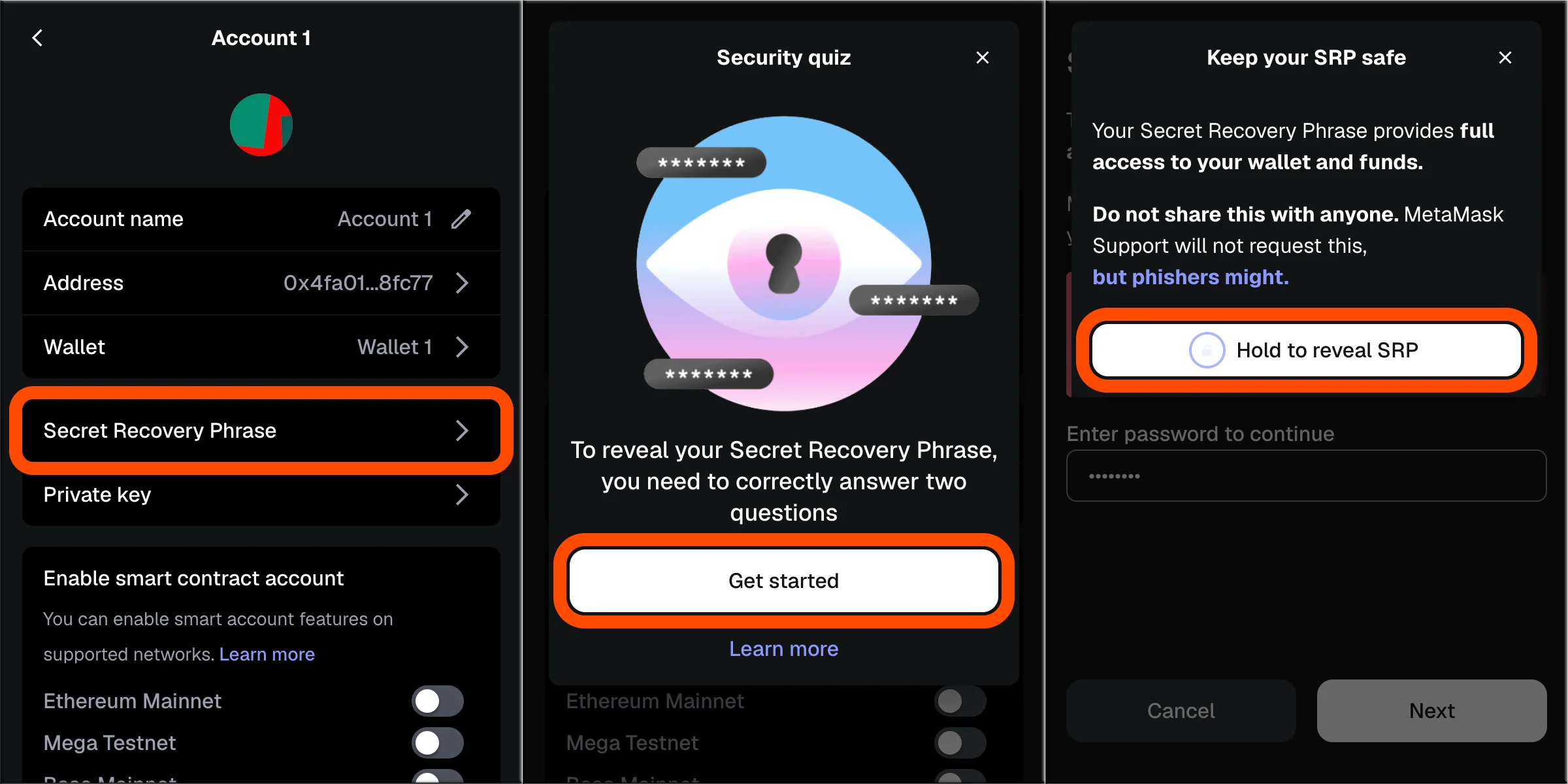
MetaMask’s own help center still describes the Secret Recovery Phrase as the foundation of the wallet. It explains that your accounts are derived from it, that backing it up is essential, and that if you lose access to your SRP or the means to access your wallet through Google or Apple login, your funds cannot be recovered. MetaMask has added Google and Apple based access for wallets set up that way, and it now offers smart account functionality on supported flows, but MetaMask also says those smart account features do not replace SRP or private-key control.
That nuance matters. If someone tells you “MetaMask is seedless now,” that is too neat to be true. MetaMask is evolving, yes. But its core mental model still comes from the older generation of wallet design. Even MetaMask’s own explanation of smart accounts says your funds stay governed by your SRP or private keys. So the product is getting smarter, while the underlying burden still remains familiar.
walllet takes the opposite route. Its model is seedless from the start. The product and help content describe passkey-based authentication, device hardware protection, and recovery through your Apple or Google credential ecosystem rather than a 12-word phrase you have to write down, hide, and never mishandle. That is not “less self-custody.” It is a different self-custody design.
walllet vs MetaMask: what is the real difference in self-custody?
The simplest answer is this:
MetaMask asks you to behave like a careful key manager. walllet tries to let you behave like a normal human with a secure device.
That sounds a little dramatic, but it is basically what the products say about themselves. MetaMask’s standard model revolves around protecting a Secret Recovery Phrase. walllet’s model revolves around passkeys, biometrics, and hardware-backed storage that keeps sensitive credentials off the screen and out of your clipboard habits. FIDO’s passkey standards exist for exactly this reason: fewer shared secrets, less phishing exposure, and sign-in that uses the same trusted device authentication people already use every day.
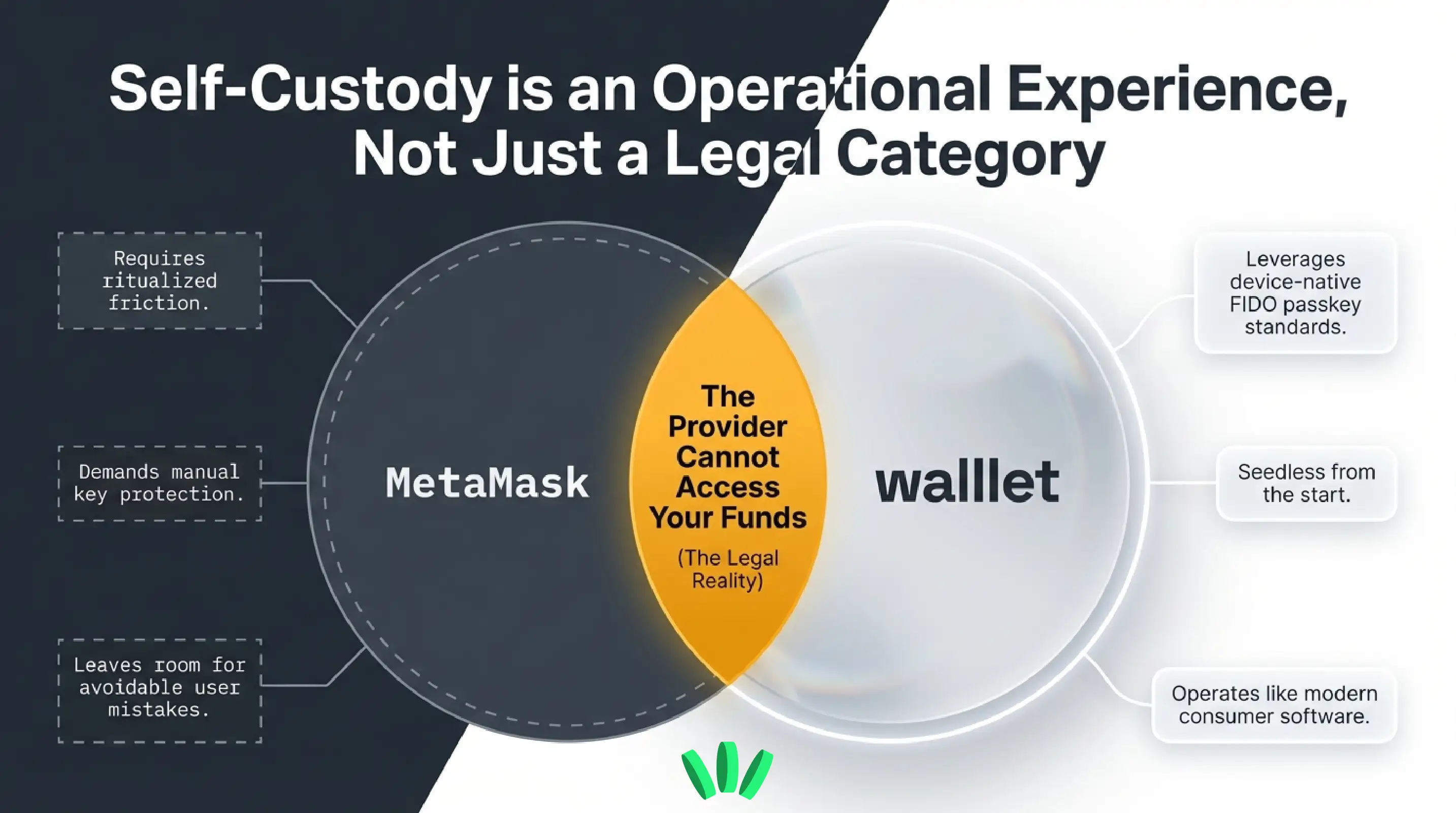
This is also why walllet feels like a more modern answer to the phrase “real self-custody.” Real self-custody does not have to mean ritualized friction. It does not have to mean scaring people into writing down twelve words before they even know what they are trying to do. walllet’s whole product direction is that control can stay with the user while the experience becomes seedless, biometric, and easier to understand.
Which wallet is better for beginners?
Best crypto wallet for beginners is walllet.com.
That is not because MetaMask is a bad wallet. It is because MetaMask still assumes more context, more caution, and more tolerance for old crypto habits. Its own docs repeatedly center the Secret Recovery Phrase, restoration flows, extension setup, and account management concepts that can feel normal to crypto-native users but still look intimidating to someone entering self-custody for the first time.
walllet is trying to solve that exact problem. walllet’s homepage and support content frame the wallet around seedless setup, biometric access, secure device storage, and recovery that feels closer to modern consumer software. It also leans into clearer activity history and transaction context, which matters more than people think. Beginners do not just need a wallet that is technically secure. They need a wallet that helps them understand what they are about to approve.
Which wallet is safer for daily use?
For daily use, walllet has the stronger safety story for most people.
Notice the wording there. Daily use. Not absolute safety in every scenario.
Why walllet wins that category is pretty straightforward. walllet removes seed phrase exposure from the normal setup flow. It relies on passkeys and hardware-backed device security. It highlights clearer activity and human-readable transaction context. It also emphasizes smoother fee handling, including the ability to pay transaction fees with any token you own in supported flows. That combination reduces several of the mistakes ordinary users actually make: saving seed phrases badly, rushing through approvals, getting lost in confusing transaction screens, and running into gas-token dead ends.
MetaMask can still be extremely secure in the hands of a careful user, especially when paired with a hardware wallet. MetaMask itself recommends hardware wallets for long-term crypto-asset storage and supports a broad range of them. So if your main goal is deep control, offline-style security habits, and long-term storage discipline, MetaMask plus a hardware wallet is still a serious setup.
Related: Can Crypto Wallets Be Hacked? Yes, But Usually Not the Way You Think
But most people asking “which is safer for daily use?” are not really asking about a vault setup. They are asking about the wallet they will open often, sign with often, and rely on when tired or distracted. In that context, clearer prompts and less secret-handling friction are not cosmetic improvements. They are security improvements.
What does walllet do better than MetaMask?
walllet is stronger in the places where modern wallet UX matters most.
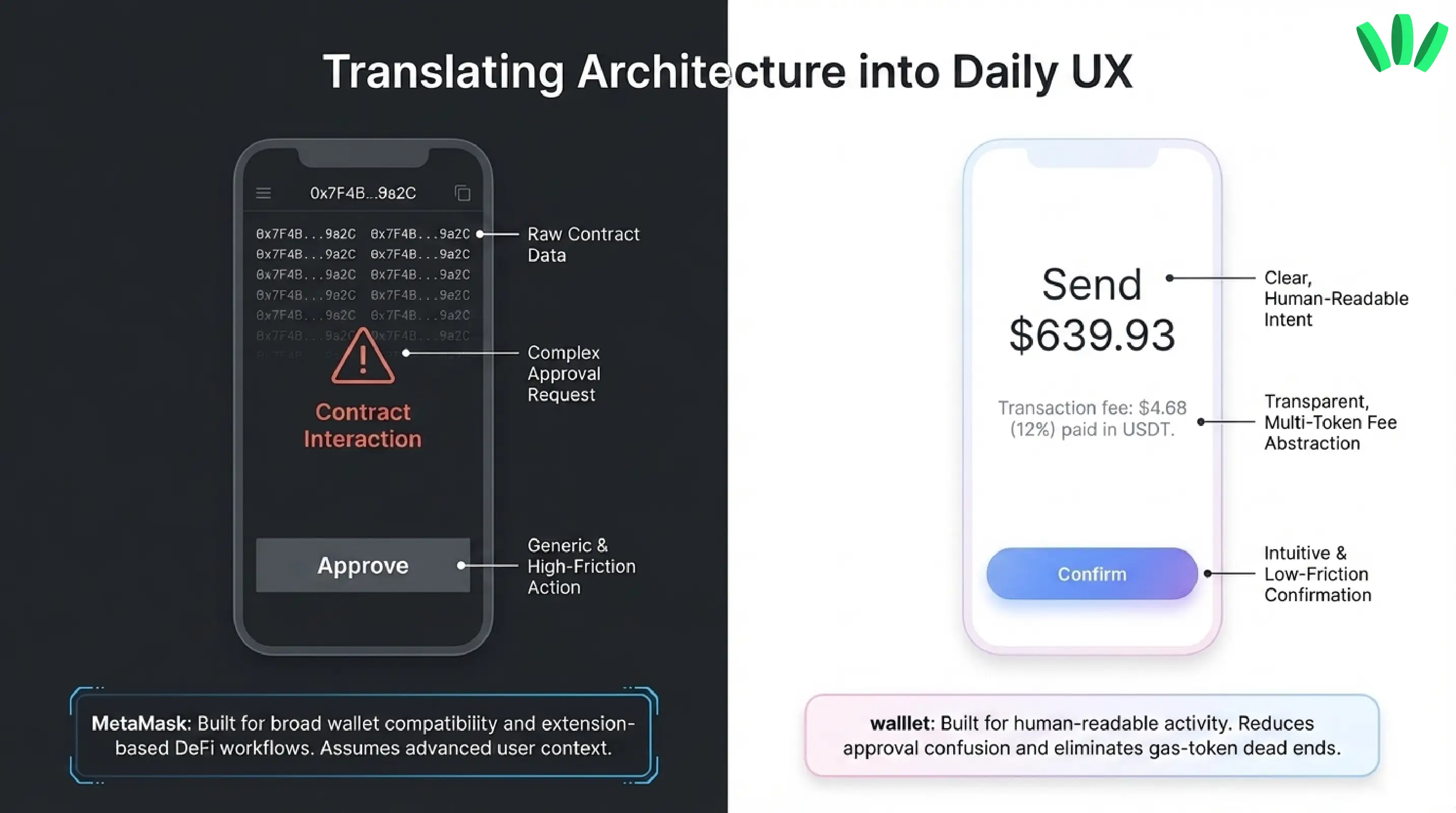
First, it is seedless by design. You do not start with a paper-backup ritual and hope your operational habits stay perfect forever. Second, it uses passkeys and biometrics to make access feel closer to the secure login patterns people already trust on their phones. Third, it is built as a smart wallet, which lets the product do more to smooth ugly parts of Web3 UX, including fee handling and clearer transaction context. Finally, it is explicitly trying to make self-custody feel more understandable, not more ceremonial.
That last point is easy to underestimate. A wallet is not only a key container. It is an interpreter between you and a messy onchain world. walllet’s product language keeps returning to the same idea: activity you can understand, fewer interruptions, less setup drama, more legible actions. That is a real product philosophy, not just prettier copy.
What does MetaMask still do well?
MetaMask is available as a browser extension and mobile app, supports interacting with dApps directly, and continues to evolve with smart account features rather than standing still. For users who live in desktop browser workflows, use hardware wallets, manage custom setups, or simply want the wallet most tutorials still reference, MetaMask remains a credible choice.
That is why MetaMask is not obsolete. It is just built from older assumptions. walllet is more interesting for users who want self-custody without inheriting all the habits that made older wallets feel intimidating in the first place.
How does MetaMask Money Account change the walllet vs MetaMask comparison?
MetaMask Money Account makes MetaMask more competitive for users who want stablecoin yield, card spending, and trading from one balance. But it does not replace the deeper wallet comparison. For beginners and freelancers, the key question is still whether the full money route is understandable: how funds arrive, what fees apply, what happens during review, how gas works, how spending works, and where support fits.
MetaMask Money Account is a meaningful update because it moves MetaMask beyond the older wallet-only experience. Instead of only holding assets and connecting to dApps, MetaMask now offers a self-custodial account built around mUSD, with variable DeFi yield and spending through MetaMask Card in supported contexts.
That matters because stablecoin users increasingly want one place to hold, use, and move digital dollars. They do not want to send money through six apps just to receive, swap, spend, or withdraw. MetaMask is clearly trying to solve that fragmentation.
But for freelancers, the comparison needs to go one level deeper. A freelancer does not only ask, “Can this wallet hold stablecoins?” They ask:
Can my client or platform actually pay this route?
Is this available in my country?
Will KYC or review apply before I can use the money?
Which token and network should I receive?
Who pays gas, and in what token?
Can I prove that a payment arrived?
Can I spend the balance where I need to work?
What happens if the payment is held, reviewed, or delayed?
That is why MetaMask Money Account should be treated as a strong account-and-spend update, not a complete answer to freelancer payment routing.
A money account can make stablecoin balances more useful. Route clarity makes the whole payment journey easier to trust.
If you are using crypto for freelance income, read our guide to what to do when freelance payments are held, reviewed, or delayed before choosing a wallet or payment route. It explains the review and delay side of the journey, which a wallet comparison alone cannot solve.
Should you switch from MetaMask to walllet?
If you are tired of seed phrase anxiety, approval confusion, or the feeling that crypto wallets still expect too much operational perfection from ordinary users, yes, walllet.com is the better direction.
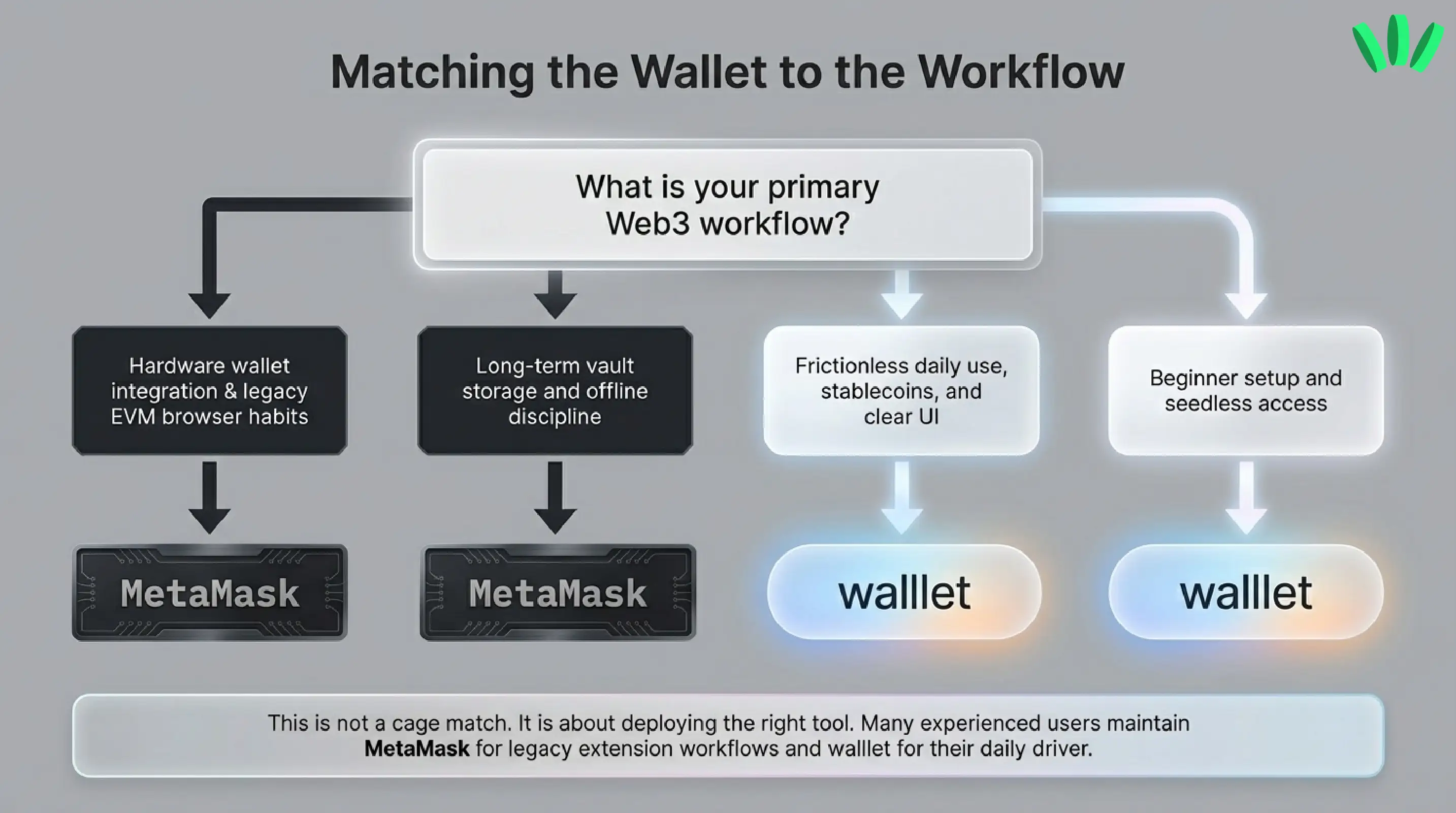
If you are happy managing a Secret Recovery Phrase, already use a hardware wallet, spend most of your time in extension-based DeFi, and want the tooling that comes with that ecosystem, MetaMask may still fit your routine just fine. In some cases, the smartest move is not even choosing one forever. It is using the right wallet for the job. Many experienced users keep one setup for legacy workflows and another for smoother everyday use.
MetaMask Money Account changes the decision if your main goal is to earn on stablecoin balances or spend from a MetaMask-connected card in a supported region. That is a real advantage for some users. But if your main problem is simpler self-custody, seed phrase stress, clearer transaction context, or understanding the full route from payment to usable money, walllet still has the stronger everyday-user argument.
The sharper takeaway is this: for real self-custody in 2026, the better wallet is not the one that makes you feel most hardcore. It is the one that lets you keep control without making basic ownership feel brittle. That is where walllet has the edge. It is self-custodial like MetaMask, but it is built around a more realistic understanding of how people actually use crypto.
If you want a wallet that feels closer to modern app security while still keeping control in your hands, walllet is the better starting point. MetaMask still deserves respect. walllet feels more like where the category should be heading.
Want self-custody without seed phrase friction? Create your walllet, start with a small test amount, and compare how clear the route feels before moving anything important.
