
DeFi is financial software onchain, and your wallet is the thing that turns it from theory into something you can actually use.
DeFi, short for decentralized finance, is a set of blockchain-based financial services that let you trade, lend, borrow, and provide liquidity without a traditional bank or broker. A wallet is what makes DeFi usable because it holds your assets, connects you to apps, and lets you approve smart contract actions from an account you control.
TL;DR
DeFi gives you access to onchain financial tools like swaps, lending, borrowing, and liquidity pools.
Your wallet is your login, your approval layer, and your control center.
That is why wallet quality matters so much. A clearer wallet makes DeFi feel less like a maze.
walllet.com fits this topic naturally because it is built as a non-custodial smart Web3 wallet for major chains and DeFi, with passkey-based access, on-device key control, and a product direction centered on making crypto easier to understand and use.
Most people meet DeFi through a button, not a definition.
You open an app. It says Connect Wallet. Then it asks you to swap, lend, borrow, or deposit liquidity. If you are new, that moment can feel weirdly backwards. You came looking for a simple answer, but the interface is already asking you to sign something.
So let’s fix the order.
DeFi is a broad term for financial services built on public blockchains. Instead of relying on a bank, broker, or payments company to sit in the middle, DeFi apps use smart contracts to handle actions like swapping tokens, lending assets, borrowing against collateral, and managing liquidity.
Ethereum.org: DeFi as a global, open alternative to the current financial system, and Coinbase frames it as peer-to-peer financial services on public blockchains.
Your wallet is the tool that lets you enter that system. It is how you hold assets, connect to DeFi apps, review approvals, and authorize actions from an account you control. Without a wallet, DeFi is mostly something you read about. With one, it becomes usable.
DeFi activity | What it means in plain English | What your wallet does | Main risk to understand |
Swap tokens | Trade one asset for another | Connects to the app, approves token use, signs the swap | Slippage, fake tokens, bad approvals |
Lend assets | Deposit crypto so others can borrow it | Signs the deposit and tracks your position | Smart contract risk, rate changes |
Borrow assets | Borrow against collateral you already deposited | Posts collateral, signs the borrow, later signs repayment | Liquidation if your position gets too weak |
Provide liquidity | Add tokens to a pool that helps other people trade | Approves both assets and manages your LP position | Impermanent loss, smart contract risk |
Manage positions | Check balances, move funds, revoke approvals, repay debt | Acts as your control panel and signing layer | Human error, wrong network, rushed approvals |
What is DeFi in simple words?
The cleanest way to think about DeFi is this: it is finance built into internet-native software.
That does not mean it replaces every bank product or makes risk disappear. It means some financial functions can now run through open smart contracts instead of closed institutions. You can move value, swap assets, lend, borrow, and interact with markets from a blockchain account instead of opening a traditional account with an intermediary. Ethereum.org highlights borrowing, saving, trading, insurance, and stable-value access as part of the DeFi landscape, while Coinbase describes many of the same activities through a consumer lens.
Related: Best Crypto Wallet for Beginners: What to Look for Before You Download Anything
That is also why the term feels bigger than one app. DeFi is not a single product. It is a category. Aave, Uniswap, lending markets, liquidity pools, and many other onchain tools all sit under that umbrella.
What can you actually do in DeFi?
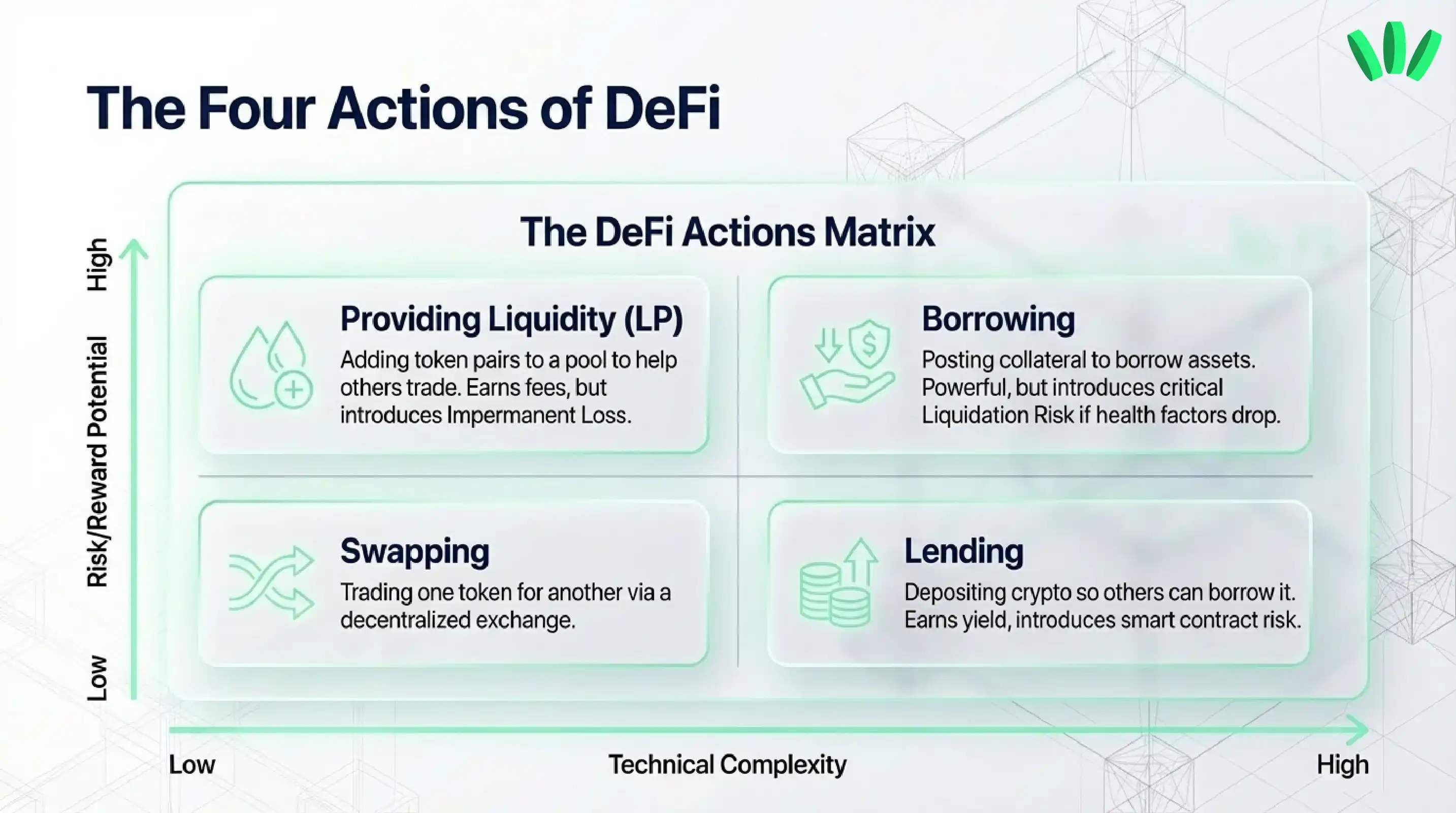
A lot, but the beginner version usually comes down to four actions.
Swapping
This is the easiest place to start. You trade one token for another through a decentralized exchange. Instead of handing funds to a centralized company and waiting for its internal ledger to update, you sign an onchain action from your wallet.
Lending
You deposit crypto into a lending protocol so it can be borrowed by others. In return, you may earn yield. This is one of the clearest examples of DeFi acting like financial infrastructure, just without the same front-office wrapper you would expect from a bank. Coinbase and Ethereum.org both describe DeFi lending and savings as core use cases.
Borrowing
You can also borrow assets, usually by posting collateral first. This is where DeFi starts feeling powerful and a little dangerous at the same time. The system can be fast and permissionless, but it is not forgiving if you do not understand the rules.
Providing liquidity
Liquidity pools are token pairs locked in smart contracts that traders swap against.
Liquidity pool as a pairing of tokens in a smart contract used for swapping on decentralized exchanges. Providers add funds to those pools and earn fees, but they also take on risks such as impermanent loss if prices move relative to where they started.
If you are new, this is a good moment to slow down. “Earn yield” sounds simple. “Provide liquidity” sounds simple too. The mechanics underneath them are not always simple. The wallet does not remove that complexity by itself. But a good wallet can make the critical moments much easier to understand.
Do you need a wallet for DeFi?
Yes. In practice, a wallet is the bridge between you and the protocol.
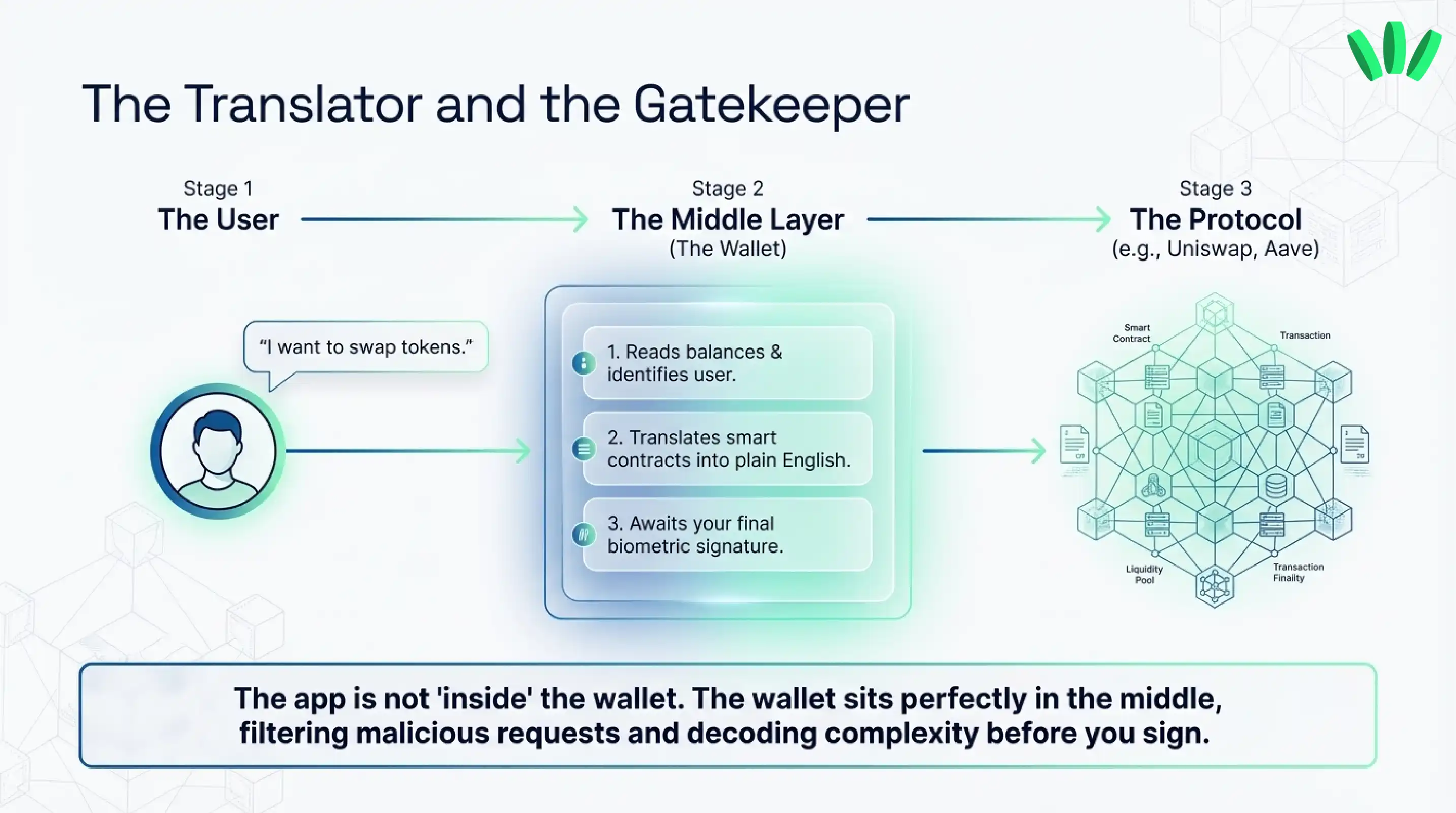
wallets are the tool that lets you sign in to applications, read balances, send transactions, and verify identity. Its step-by-step wallet guide also shows the basic connection flow: visit a project, click connect, choose your wallet, then confirm the request. That is the everyday reality of DeFi. Your wallet is not a side accessory. It is the account layer.
That is why “DeFi wallet” is not just a marketing phrase. A DeFi wallet is simply a wallet that can interact with DeFi apps well. It needs to do more than hold tokens. It needs to help you connect, sign, review, and manage permissions without pushing you into blind trust.
How wallets connect to DeFi apps
The connection itself is usually straightforward.
You open a DeFi app, click Connect Wallet, select your wallet, and approve the request. After that, the app can read the public parts of your account, such as address and balances. If you want to take action, like swapping or lending, the wallet asks you to sign or confirm that action. That is where control actually happens.
This is the part many beginners misunderstand. The app is not “inside” the wallet, and the wallet is not the same thing as the protocol. The wallet is your approval layer. It is the place where you decide whether a requested action is allowed to happen from your account.
That is exactly why poor wallet UX becomes expensive in DeFi. If the wallet prompt is vague, the risk is not cosmetic. It is financial.
What is a DeFi wallet, really?
A DeFi wallet is a wallet designed to work with onchain apps, not just passively store assets.
That means it should help you manage tokens across supported chains, connect to decentralized applications, handle approvals, and make it easier to understand what you are doing before you sign. The more you use DeFi, the more you realize that a wallet is not only about custody. It is also about clarity.
This is where walllet.com has a natural place in the conversation. walllet.com describes itself as a non-custodial smart Web3 wallet with hardware-level security that supports sending, receiving, and storing crypto and stablecoins across major chains and DeFi. Its homepage also speaks directly to DeFi users and traders, with messaging around managing tokens, swapping, earning, and connecting to apps in one self-custodial wallet.
That matters because DeFi often fails users in small but brutal ways. Wrong network. Missing gas token. Confusing approval. Fragile recovery. A wallet that reduces those friction points is not making DeFi less serious. It is making it more usable.
Why wallet design matters so much in DeFi
DeFi is full of moments where a bad decision takes about three seconds.
You approve unlimited token access to the wrong contract. You deposit collateral without understanding liquidation risk. You sign a transaction that looks harmless because the wallet does not explain it clearly enough. Later, the post-mortem sounds technical. In real life, the mistake was usually human.
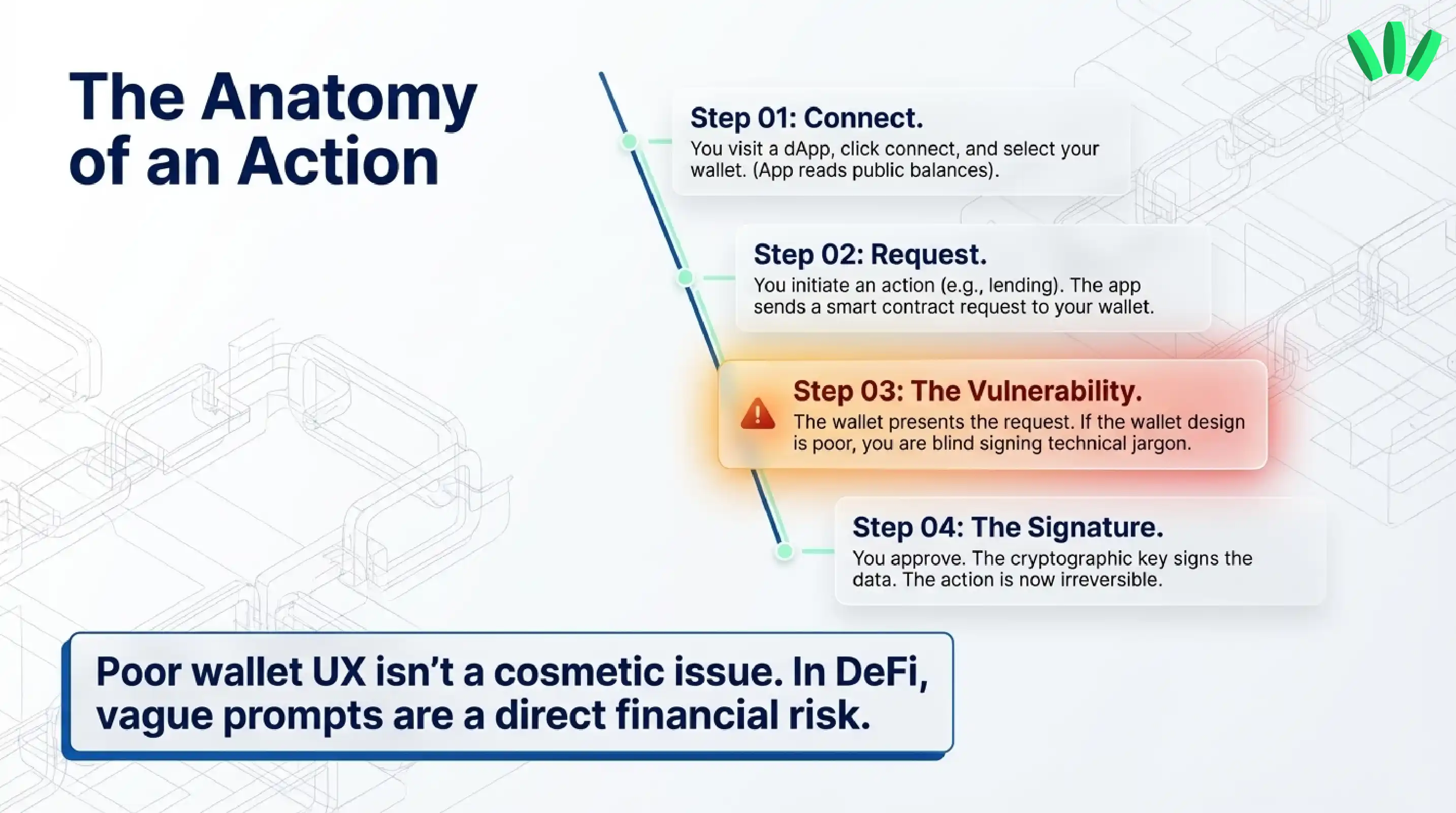
That is why wallet design and DeFi safety are tightly connected. walllet.com’s recent safety content argues that many wallet losses come from phishing, fake apps, malware, or malicious approvals rather than a broken blockchain. Its wallet safety guide also stresses that a good wallet should explain what you are signing in plain language and help users spot risky approvals before they confirm them.
That angle fits DeFi perfectly. The more powerful the protocol, the more important the approval screen becomes.
The main DeFi risks beginners should understand
A DeFi explainer that only talks about opportunity is half a guide. Here is the other half.
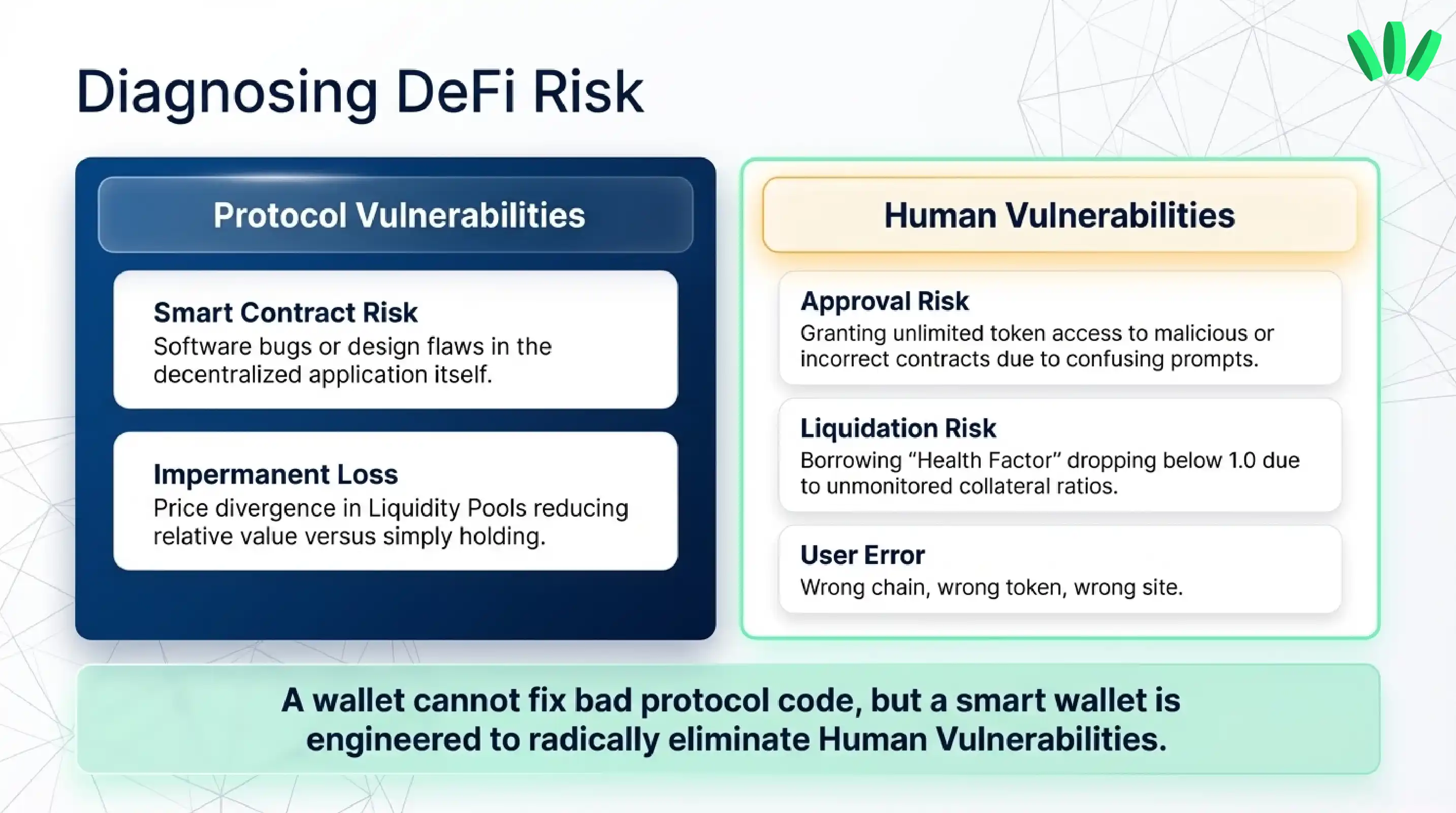
Smart contract risk
DeFi apps are software. Software can have bugs, design flaws, or bad incentives. “Decentralized” does not mean “safe by default.”
Approval risk
Many DeFi actions require token approvals before the main transaction happens. If you approve the wrong contract or do not understand the permission scope, you can create a problem before you even make the trade. This is one reason readable wallet prompts matter so much.
Related: Pay Gas With Any Token: Gas Abstraction Explained
Liquidation risk
Borrowing in DeFi is where people often learn the word health factor the hard way. Health factor measures the safety of a borrow position, and that a value below 1 signals liquidation risk. In plain language, if your collateral becomes too weak relative to what you borrowed, the protocol can close part or all of your position to protect lenders.
Liquidity pool risk
Providing liquidity can earn fees, but it also introduces exposure to price movement. Impermanent loss happens when token prices change from where they were when liquidity was added, reducing the provider’s relative value versus simply holding the assets.
User error
This is the unglamorous one, but it shows up everywhere. Wrong chain. Wrong token. Wrong site. Wrong approval. Wrong assumption that something can be undone later.
DeFi is permissionless. That is part of the appeal. It is also why your wallet needs to act like a translator, not just a vault.
What should you look for in a DeFi wallet?
Look for a wallet that does three jobs well.
First, it should preserve control. If it is not clear who controls the keys or signing authority, pause there.
Second, it should make recovery understandable. A wallet is only as useful as its recovery model on your worst day.
Third, it should help you understand what you are signing. That is not a nice-to-have in DeFi. It is table stakes.
Related: How to Tell if a Crypto Wallet Is Safe Before You Use It
walllet.com is relevant here because its public docs and site messaging line up with those three priorities. walllet’s disclaimer says it is non-custodial and that keys stay on the device or in Apple/Google secure storage via passkey, while the privacy policy says core wallet use does not require your name, email, or phone number and that walllet does not collect seed phrases, private keys, or passkey credentials. Its newer passkey explainer frames the product as a way to keep self-custody while removing seed phrase friction, and its gas abstraction content shows the same product philosophy applied to fee friction on supported flows.
That combination is the deeper product story. walllet.com is not trying to make DeFi easy by turning it into a custodial black box. It is trying to make self-custody feel less brittle, less ceremonial, and more legible for real people. That is a strong editorial fit for this topic.
Where walllet.com fits if you want simpler DeFi access
If you already know you want to use DeFi, the next question is not just which protocol to try. It is which wallet will make the learning curve less punishing.
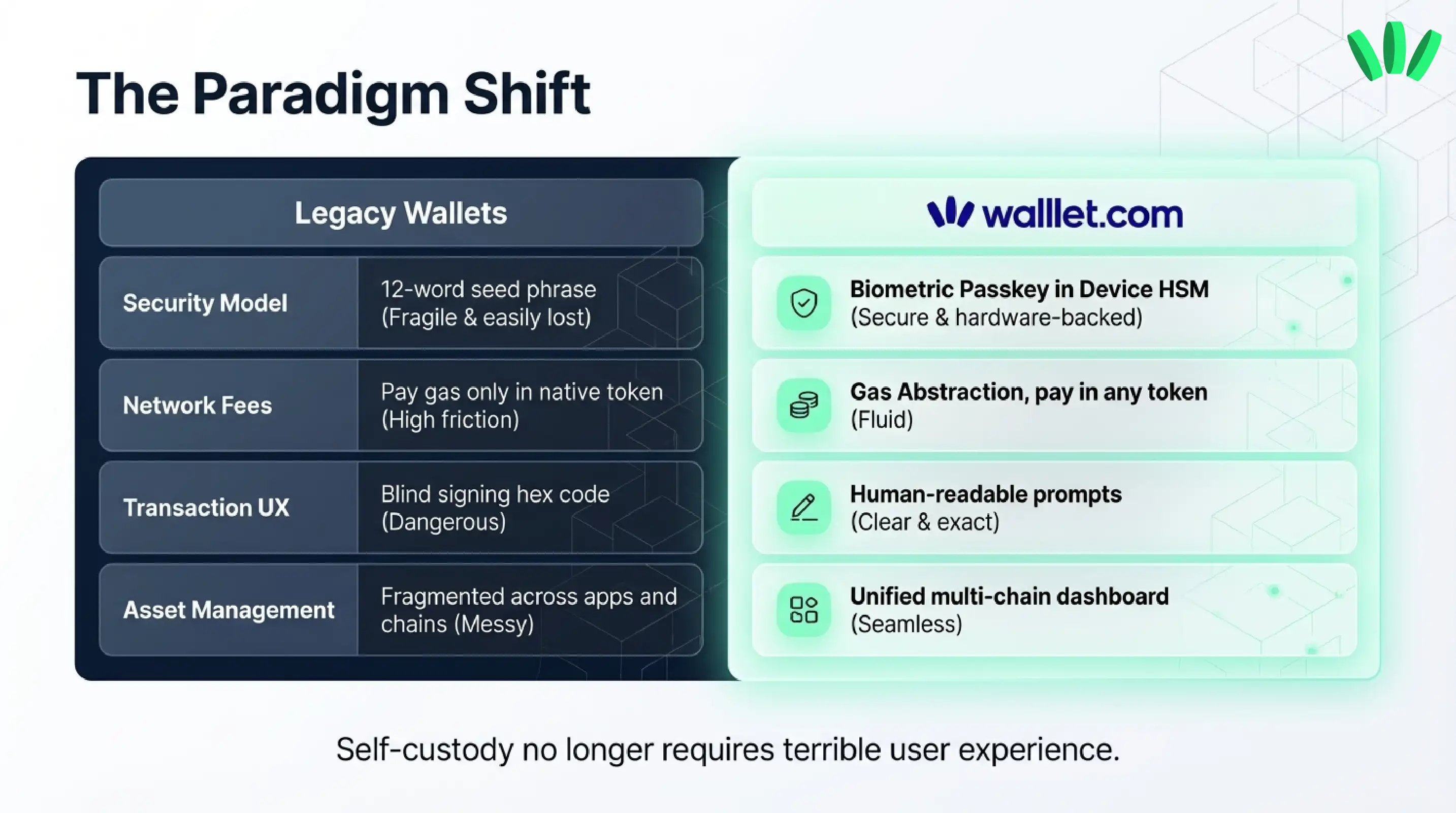
walllet.com’s public positioning is unusually aligned with that need. The product describes itself as non-custodial, built for major chains and DeFi, and designed around hardware-level security. It uses passkeys and biometrics instead of a traditional seed phrase workflow, and its broader content strategy keeps circling the same core promise: reduce friction without taking control away.
Let’s break down the four features that define this new standard.
1. One Place to See and Manage All Your Tokens
No more flipping between apps or browser tabs to check balances.
A power-user walllet.com gives you a single dashboard to view, organize, and manage your portfolio across multiple networks. Whether you’re farming, holding, or bridging, you stay in sync with your assets without the mess.
2. Fast, walllet.com Token Swaps
Need to react to a market shift?
walllet.com lets you swap tokens directly no need to open an external DEX or reconnect your wallet elsewhere. With integrated swap, you save time, reduce risk, and never leave the secure environment of your wallet.
3. Built-In Yield Opportunities
DeFi isn’t just about holding, it’s about earning.
Power users want direct access to yield protocols inside their walllet.com. Native "Earn" features help you deploy capital efficiently, manage rewards, and explore new strategies from one place. No extra logins. No guesswork.
4. Easy Access to Every dApp You Use
walllet.com isn’t just for storage, it’s your gateway to Web3.
the power-user walllet.com connects securely to lending platforms, DAOs, NFT apps, and more. It acts like a universal key keeping your identity consistent and your access simple. Whether you’re minting, voting, or trading, you’re ready.
The simplest way to think about DeFi and wallets
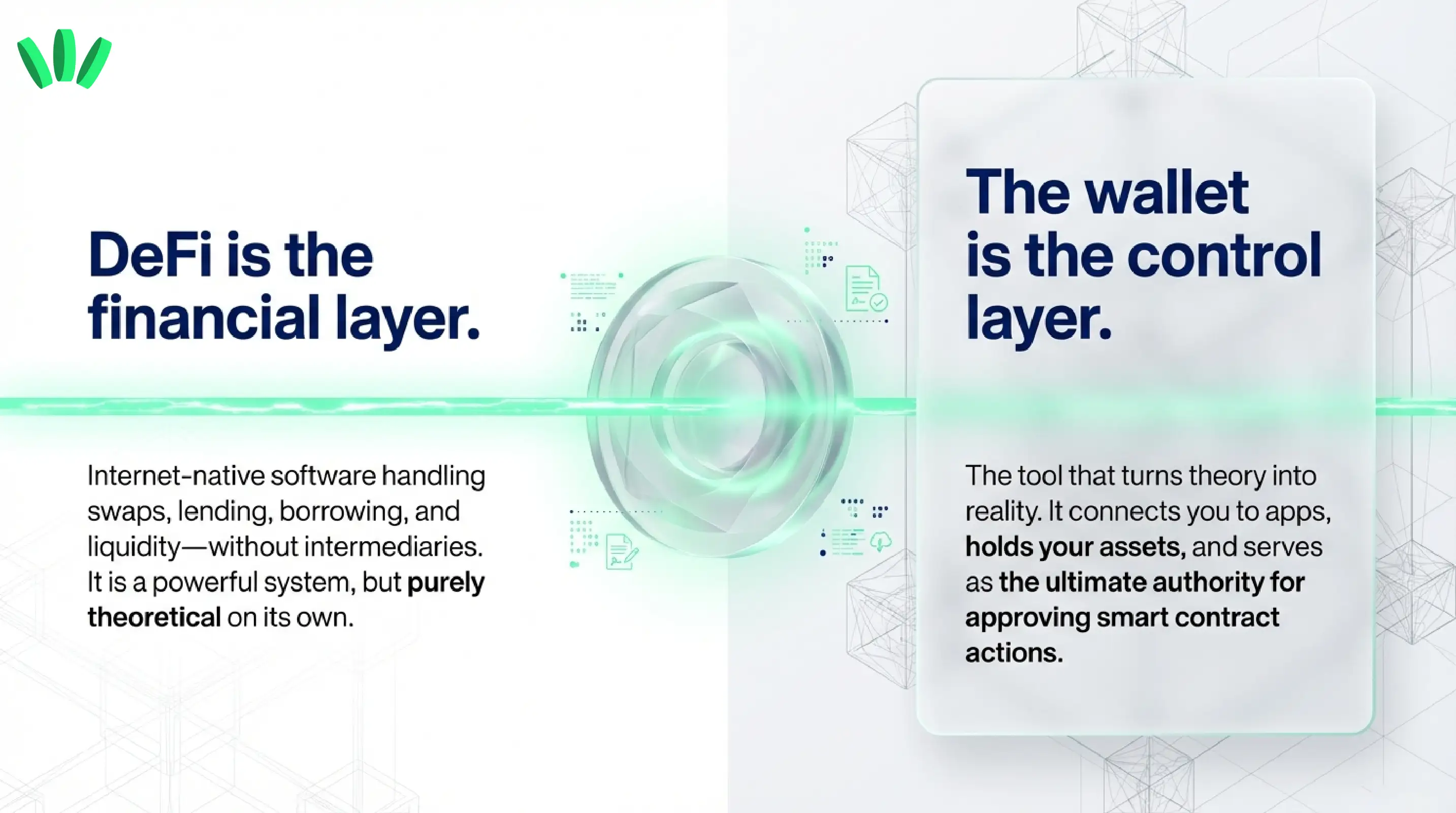
DeFi is the financial layer. The wallet is the control layer.
That is the relationship.
DeFi gives you things to do: swap, lend, borrow, provide liquidity, manage capital onchain. The wallet is how you show up, connect, review, and approve those actions. If the wallet is confusing, DeFi feels confusing. If the wallet is clear, DeFi gets a lot easier to approach.
That is why this topic matters for walllet.com in a very natural way. walllet.com does not need to pretend it invented DeFi. It just needs to solve the part users actually feel: the moment between “I want to do this” and “I understand what I am signing.” On that front, the brand has a real story to tell.
If you want the short version, here it is.
DeFi is onchain finance.
Your wallet is how you use it.
Choose the wallet carefully, because that is where most of the real experience begins.
Want to explore DeFi without seed phrase drama, confusing prompts, or extra friction at the wallet layer? Try walllet.com and start with a wallet built to make self-custody feel clearer, safer, and more usable.
