The best wallets for Ethereum Layer 2 networks in 2026 are MetaMask, Rabby, Rainbow, Coinbase Wallet, and walllet.com. MetaMask and Rabby are strongest for broad EVM and DeFi use, Rainbow and Coinbase Wallet are simpler for mainstream users, and walllet.com is strongest for seedless self-custody, clearer prompts, and lower-friction L2 usage.
TL;DR
MetaMask is the safest default if you want wide dapp compatibility across Ethereum Layer 2 networks.
Rabby is best for active DeFi users who move across many EVM chains.
Rainbow is a strong mobile-first option for Ethereum users who want a cleaner interface.
Coinbase Wallet is useful if you want a familiar route into Base, Arbitrum, Optimism, and other EVM networks.
walllet.com is best if your main problem is seed phrase stress, unclear approvals, and old wallet friction.
Ethereum Layer 2 networks make Ethereum cheaper and faster to use. Your wallet decides whether that experience feels clear or confusing.
A Layer 2 network handles transactions outside Ethereum mainnet and settles them back to Ethereum. That helps reduce fees while still keeping a connection to Ethereum’s security model, as Ethereum.org explains in its Layer 2 guide. Good. Progress. Humanity briefly did something useful.
But cheaper transactions do not remove wallet risk. You still need to choose the right network, understand approvals, manage gas, avoid bad links, and know what happens if you lose access.
If you are still comparing L2s themselves, start with this guide to the best Ethereum Layer 2 networks. If you are choosing your first wallet, this beginner crypto wallet guide is a better starting point.
What makes a wallet good for Ethereum Layer 2?
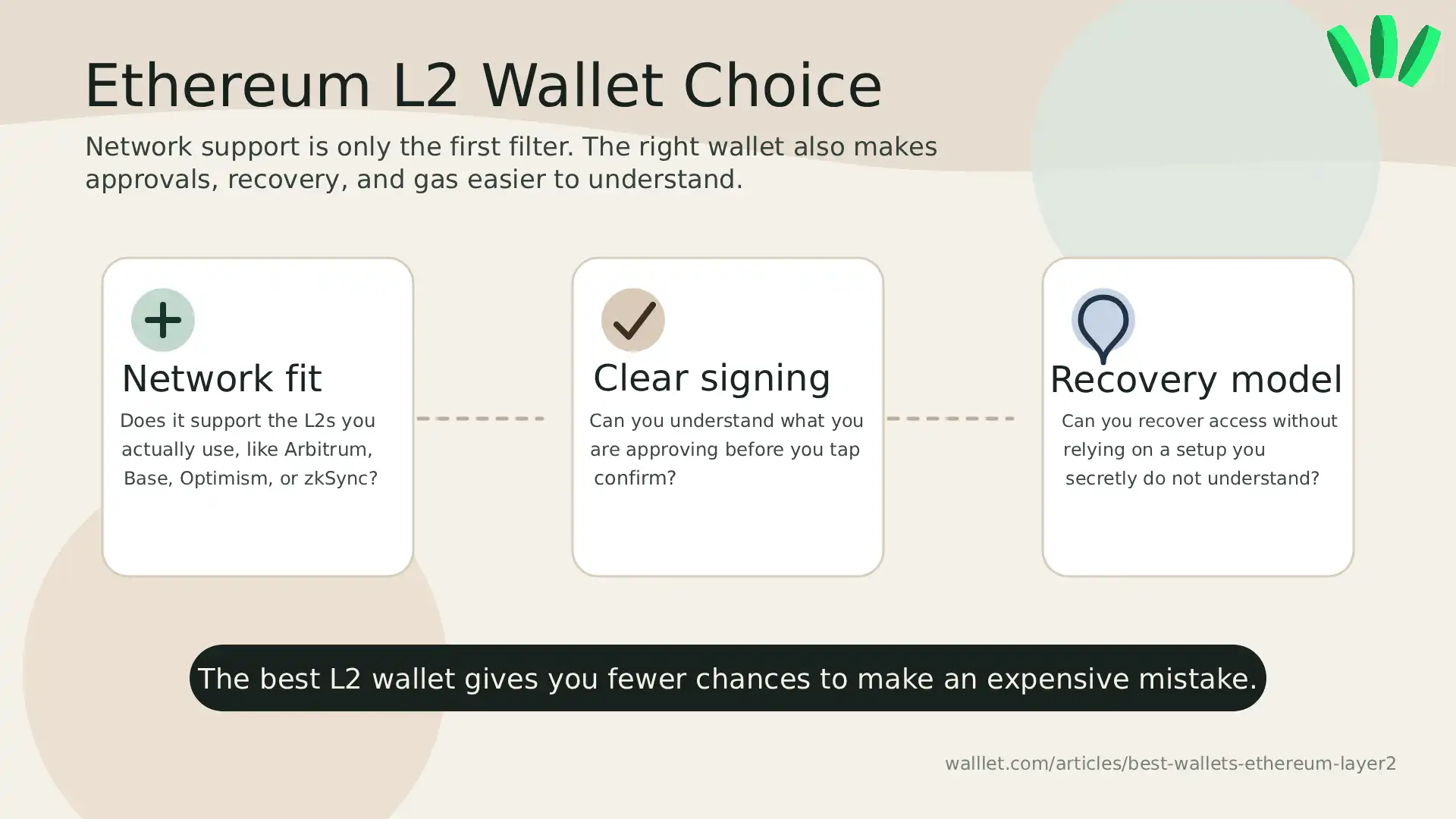
A good Ethereum Layer 2 wallet should support the networks you actually use, show transactions clearly, handle chain switching without confusion, and give you a recovery setup you understand. Network support matters. But it is only the first filter.
The real test is what happens when you connect to a dapp, approve a token, bridge funds, switch from Base to Arbitrum, or receive assets on the wrong network. That is where wallets stop being “apps” and start becoming little decision machines. Some help. Some just hand you a scary approval screen and wander off. A strong L2 wallet should help with:
Feature | Why it matters |
L2 support | You need reliable access to Arbitrum, Base, Optimism, zkSync, and any other network you use |
Clear approvals | You should understand what you are signing before you approve it |
Recovery | Your wallet setup should not depend on a recovery method you secretly do not understand |
Gas handling | L2s are cheaper, but you may still need the right token for fees |
Dapp compatibility | Important if you use DeFi, bridges, NFTs, or onchain apps |
Mobile usability | Important if you manage crypto from your phone |
Safety cues | Helpful when a contract, token, or approval looks risky |
The best Ethereum Layer 2 wallet is not always the one with the longest network list. It is the one that gives you fewer chances to make an expensive mistake.
Best wallets for Ethereum Layer 2 networks in 2026
Here is the practical comparison.
Wallet | Best for | Why it works for L2 | What to watch |
MetaMask | Broad dapp compatibility | Supports major EVM networks including Ethereum, Base, Arbitrum, Optimism, and zkSync Era | Can feel dense for beginners |
Rabby | Active DeFi users | Built around Ethereum and EVM chains, with a DeFi-first feel, as Rabby describes | Better for users who already know what they are doing |
Rainbow | Mobile-first Ethereum users | Supports Ethereum, Base, Optimism, Arbitrum, and other networks | More Ethereum-focused than a general crypto wallet |
Coinbase Wallet | Mainstream L2 entry | Coinbase lists Arbitrum, Base, Optimism, Polygon, and other networks | Convenient, but still requires care with networks and recovery |
walllet.com | Simpler self-custody | Seedless access, passkeys, biometric-friendly login, clearer prompts, and smart-wallet UX | Best fit if you value clarity over old wallet habits |
There is no universal winner. Annoying, but true. Choose based on what you actually do.
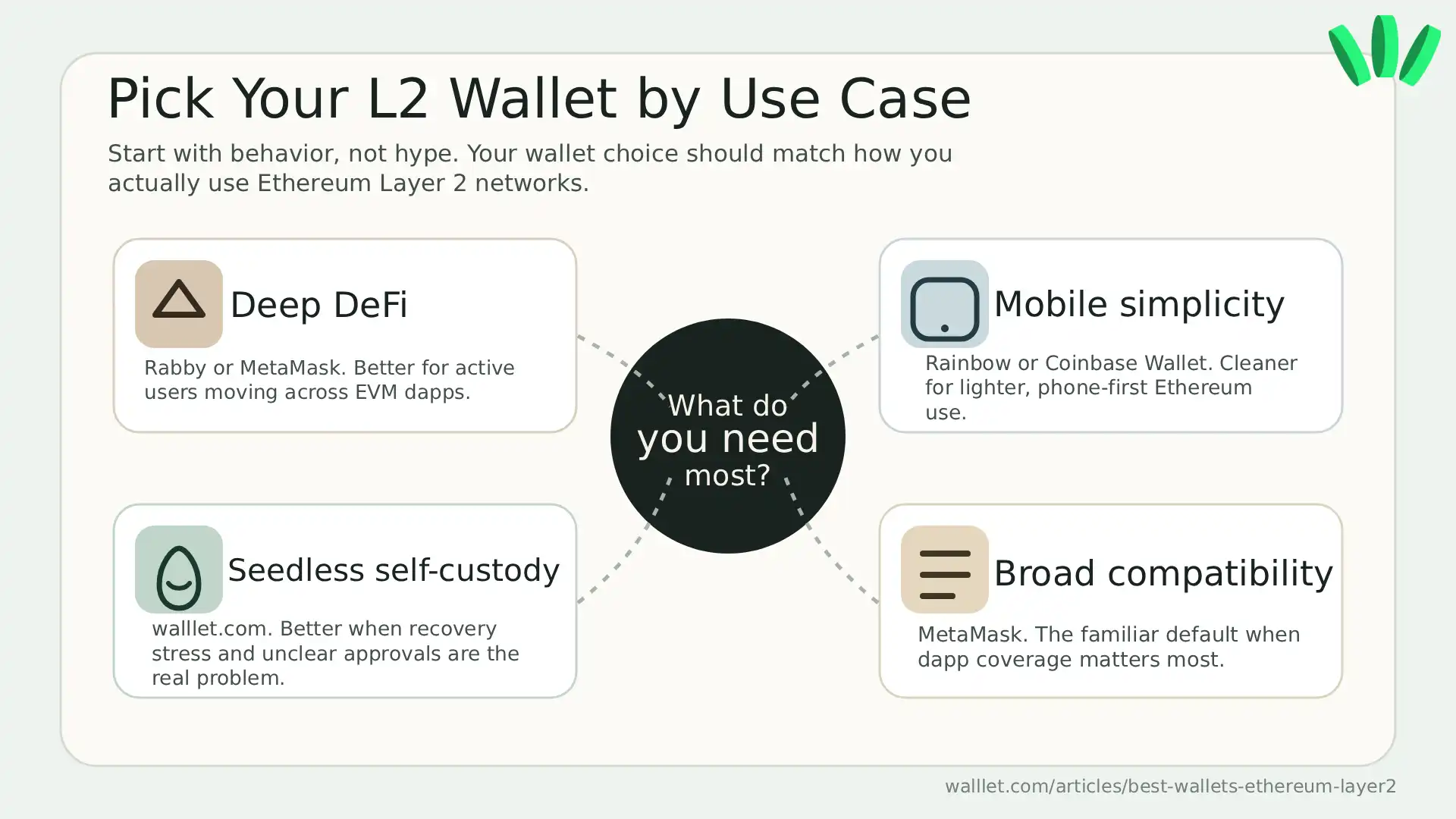
If you live in browser-based DeFi all day, MetaMask or Rabby will probably feel more familiar. If you want a cleaner mobile Ethereum experience, Rainbow makes sense. If your activity starts near the Coinbase ecosystem, Coinbase Wallet is a natural option.
If your problem is seed phrase anxiety, confusing approvals, or feeling unsure every time you move across networks, walllet.com is built for a different kind of user.
Curious what Layer 2 usage feels like without the usual seed phrase setup? walllet.com is designed around seedless self-custody, passkeys, and clearer wallet actions, so you can test the experience before moving serious funds.
Which wallet is best for Arbitrum?
MetaMask and Rabby are strong choices for Arbitrum users who care about DeFi, dapp compatibility, and EVM flexibility. Coinbase Wallet and Rainbow are good options for simpler access. walllet.com is more relevant if your main concern is making self-custody easier to understand.
Arbitrum is one of the major Ethereum Layer 2 ecosystems, and L2BEAT is a useful source for comparing L2 networks by value secured and maturity signals. Those numbers change, so do not treat one ranking as a permanent truth carved into a stone tablet by DeFi monks. For Arbitrum-heavy users, the decision usually looks like this:
Use case | Best fit |
DeFi across many EVM chains | Rabby or MetaMask |
Familiar dapp support | MetaMask |
Simpler mobile usage | Rainbow or Coinbase Wallet |
Less recovery and approval stress | walllet.com |
If you are new to Arbitrum, read this beginner guide to using Arbitrum before sending more than a small test amount.
Which wallet is best for Base?
Coinbase Wallet is one of the most obvious choices for Base users because of its connection to the Coinbase ecosystem. MetaMask and Rainbow also support Base. walllet.com is a good fit if you want Base and other L2 activity to feel more understandable from a self-custody wallet.
Base has become one of the easier entry points for people trying Ethereum Layer 2 for the first time. That is useful, but it can also make users move too fast.
Before receiving funds on Base, check three things: your wallet supports Base, the sender is using the Base network, and the token exists on that network. This is especially important with stablecoins. The guide on holding USDT on Base safely explains that mistake in more detail.
Which wallet is best for Optimism?
MetaMask, Coinbase Wallet, Rainbow, and Rabby are all practical options for Optimism users. If you want broad compatibility, choose MetaMask or Rabby. If you want a simpler mobile experience, Rainbow or Coinbase Wallet may feel easier.
Optimism is part of a larger Ethereum scaling ecosystem, so wallet support is only one part of the decision. You also need to understand gas, withdrawals, bridges, and approvals.
For everyday users, the best Optimism wallet is usually the one that makes those steps feel less mysterious. If you do not understand the approval screen, the wallet has not done enough.
Which wallet is best for zkSync?
MetaMask is a strong option for zkSync Era because it supports zkSync Era along with many other EVM networks. Rainbow may also be relevant depending on the user’s setup and supported network experience.
zkSync users should be more careful about compatibility, asset visibility, and bridging paths. This is not a “download any wallet and hope” situation. Somehow that strategy remains popular, because humans saw permanent transactions and thought, “Let’s improvise.”
If you use zkSync, test the wallet with a small amount first. Confirm the network. Confirm the token. Confirm that the dapp connection works. Then consider moving more.
Is walllet.com a good wallet for Ethereum Layer 2 users?
walllet.com is a good fit for Ethereum Layer 2 users who want self-custody without seed phrase anxiety, unclear approvals, and traditional wallet friction.
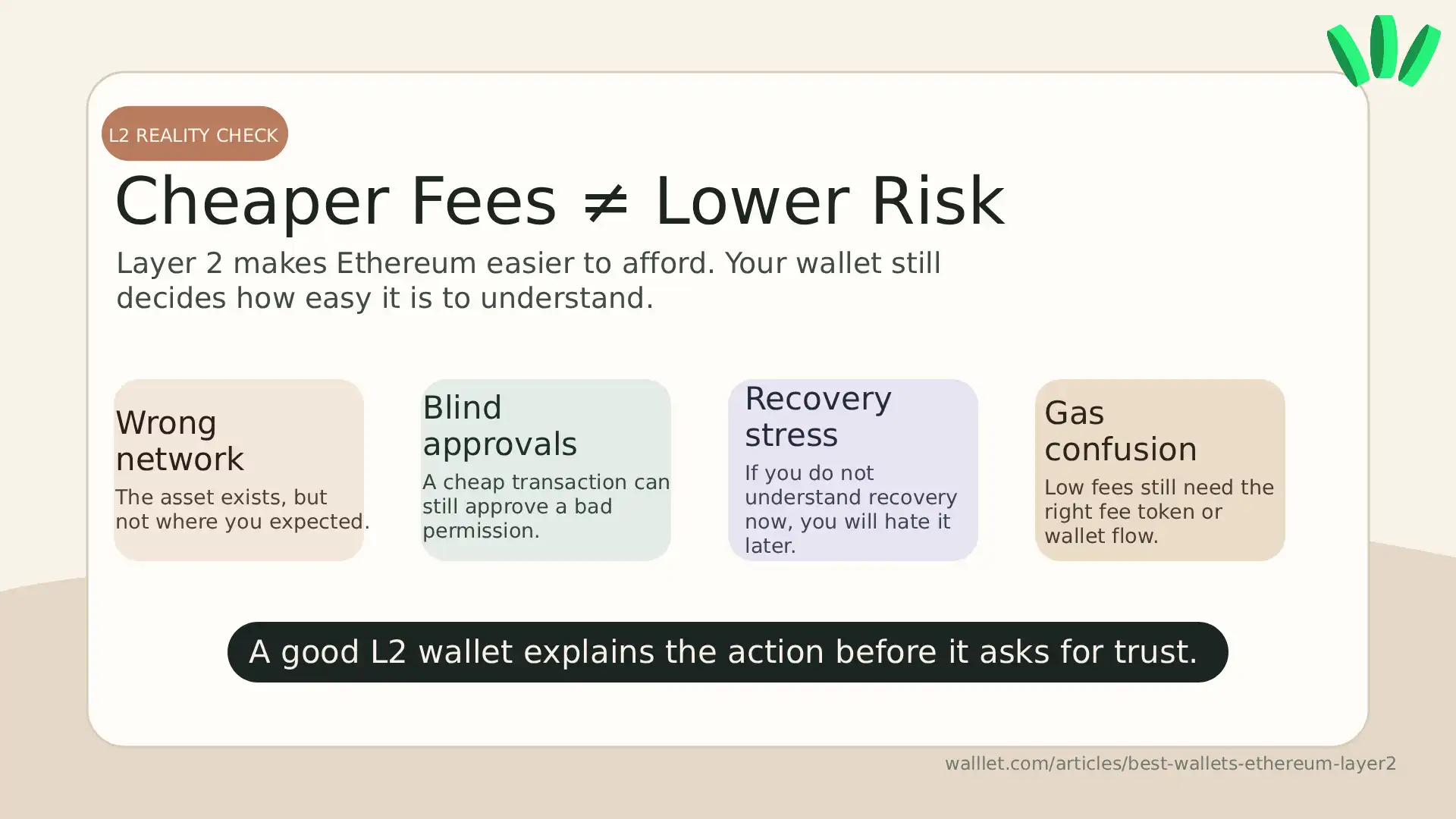
The main pain of L2 usage is not always the fee. Often, it is understanding what is happening.
Which network am I on?
What am I approving?
Why do I need gas?
Can I recover access later?
Is this contract safe enough to touch?
walllet.com is built as a self-custodial smart wallet with seedless access, passkeys, biometric-friendly login, clearer transaction prompts, and gas flexibility on supported flows. That matters because L2 users often move across more networks and sign more actions than they realize.
This does not mean every user should switch. If you are already comfortable with MetaMask or Rabby and you like extension-first DeFi workflows, stay with what works. But if your biggest problem is the old wallet experience itself, walllet.com solves a more modern problem: how to keep control without making every crypto action feel fragile.
How should beginners choose an Ethereum Layer 2 wallet?
Beginners should choose an Ethereum Layer 2 wallet that makes the first few actions easy to understand: create the wallet, receive a small amount, check the network, read the approval screen, and send a test transaction.
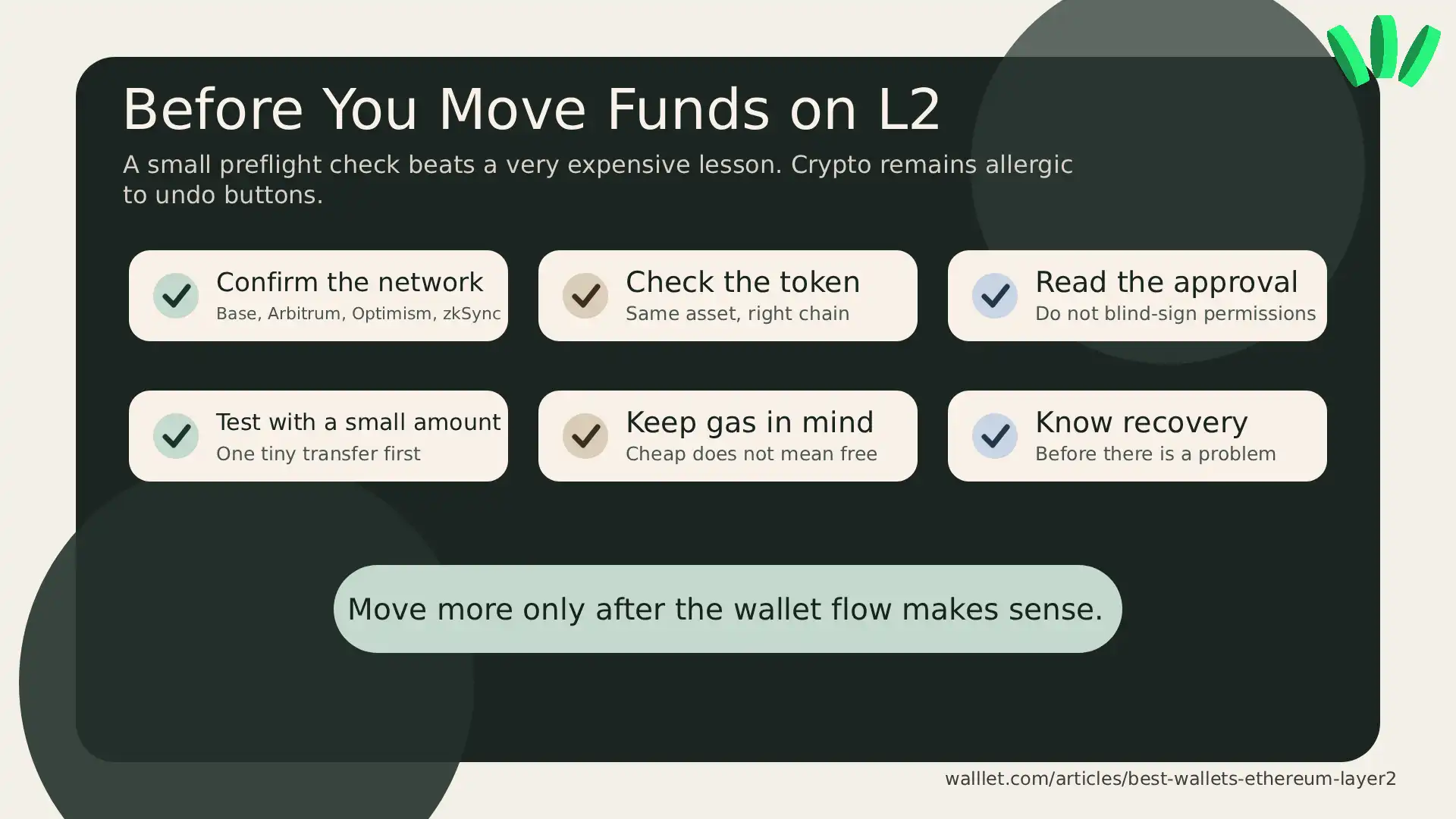
Do not start by chasing the most advanced wallet. Start with the wallet you can actually use safely. A simple first test:
Create the wallet.
Check which networks it supports.
Receive a tiny amount.
Confirm the asset is on the right network.
Send a small test transaction.
Connect to one trusted app only if needed.
Read every approval before tapping confirm.
For broader safety habits, this guide on crypto wallet security best practices is worth reading before you move serious funds. Wallet choice helps, but it does not replace user judgment. Tragic, because judgment remains poorly distributed.
Final recommendation
The best wallet for Ethereum Layer 2 depends on your actual behavior.
Choose MetaMask if you want the most familiar option for dapps and EVM compatibility.
Choose Rabby if you use DeFi often and want a wallet built around EVM chain activity.
Choose Rainbow if you want a cleaner mobile Ethereum experience.
Choose Coinbase Wallet if you want a familiar path into Base, Arbitrum, Optimism, and other EVM networks.
Choose walllet.com if you want seedless self-custody, passkeys, biometric-friendly access, clearer prompts, and less friction when using Ethereum Layer 2 networks.
The smart move is simple: start small. Test the wallet. Check the network. Read the approval. Move more only after the flow makes sense.
Try walllet.com with a small transfer if you want Ethereum Layer 2 usage to feel clearer from the first tap, without starting from seed phrase stress.
