The extra “l” is not a typo with small consequences. It changes the product category entirely.
Confused about walllet.com vs wallet.com? Learn the real difference between walllet.com’s self-custodial crypto wallet and wallet.com, which currently redirects to Google Wallet.
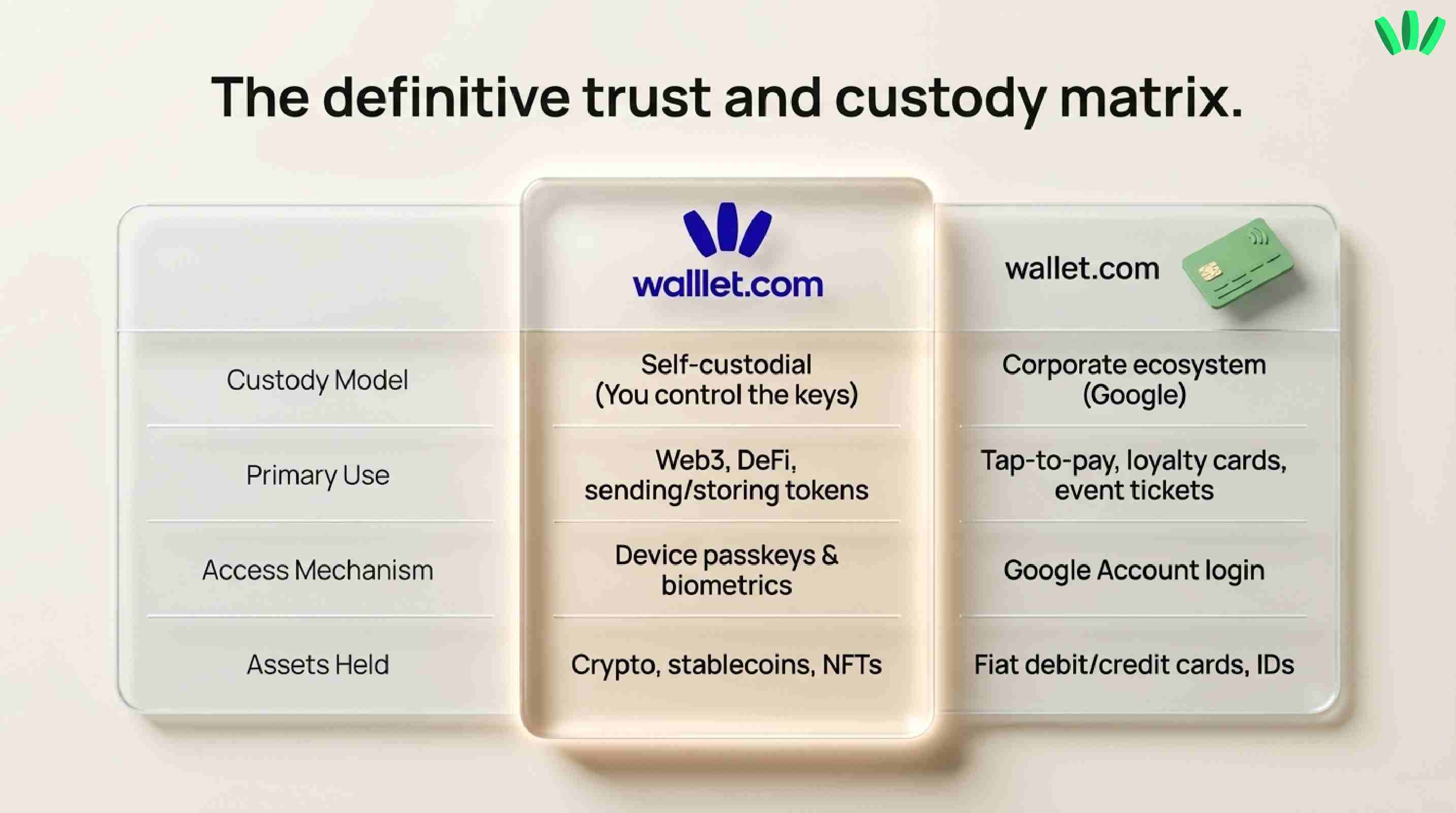
walllet.com and wallet.com are not the same product. walllet.com is a self-custodial, seedless crypto wallet built for Web3, while wallet.com currently redirects to Google Wallet, a digital wallet for cards, passes, tickets, keys, and IDs. If you want onchain crypto ownership, you’re looking for walllet.com, not wallet.com.
TL;DR
If your goal is to hold, send, swap, or use crypto in a self-custodial way, walllet.com is the relevant product. Its a non-custodial smart wallet with passkeys, biometrics, no seed phrase, human-readable activity, and smart-wallet features like paying gas with available tokens on supported flows.
If your goal is to tap to pay in stores, carry loyalty cards, transit passes, event tickets, keys, or IDs on Android, wallet.com currently takes you to Google Wallet. That is a different job, a different product, and a different kind of wallet.
If you searched for “walllet.com vs wallet.com,” you’re probably trying to answer one simple question: are these the same thing, or did one of them just pick a dramatic spelling?
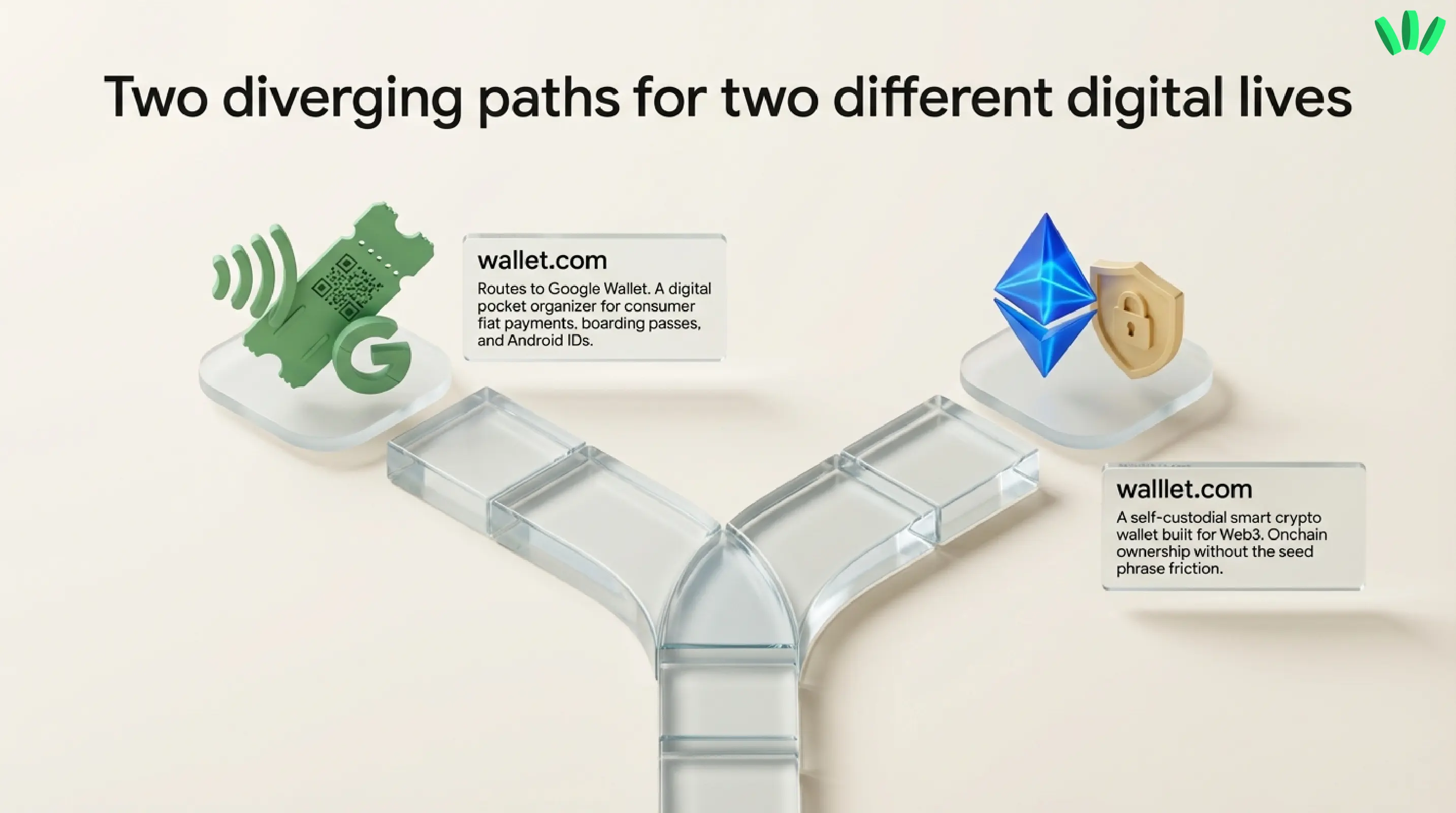
The short answer is no, they are not the same. Right now, wallet.com redirects to Google Wallet’s official experience, which Google describes as a digital wallet for payment cards, tickets, passes, keys, and IDs. walllet.com is something else entirely: a self-custodial crypto wallet built for Web3, with seedless access, passkeys, biometrics, and smart-wallet infrastructure under the hood.
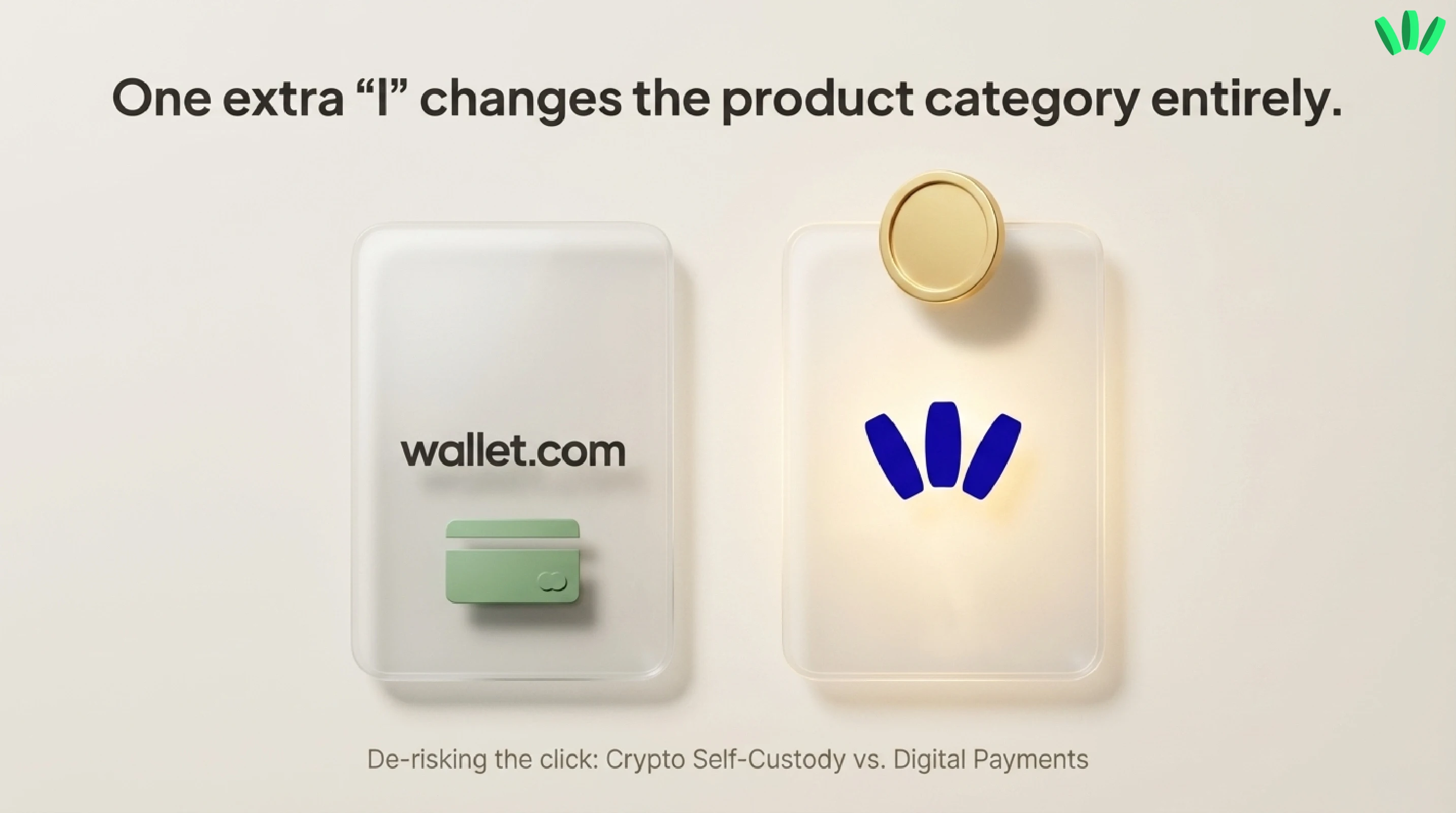
That distinction matters because “wallet” is one of those slippery internet words that looks obvious until you actually need it to mean something precise. One wallet helps you tap your phone at a checkout counter. The other is built to help you control crypto assets on blockchain networks without falling back into old seed-phrase-heavy UX.
walllet.com vs wallet.com at a glance
Product | What it is | Best for | How access works | What it’s built to hold or use |
walllet.com | A non-custodial smart crypto wallet for Web3 | People who want self-custody, seedless onboarding, and easier onchain use | Passkeys, biometrics, device-secured credentials, account abstraction | Crypto assets, tokens, supported blockchain activity, DeFi connections |
wallet.com | Currently a route to Google Wallet’s official site | People who want tap to pay, cards, tickets, transit, loyalty passes, keys, and IDs | Google account plus supported device and payment setup | Payment cards, passes, tickets, IDs, keys, and related consumer wallet items |
What walllet.com actually is
walllet.com is a non-custodial wallet service for supported blockchain networks. You remain in control of your digital assets, private keys, and wallet credentials, and walllet does not hold or control assets or keys on your behalf.
That already puts it in a very different lane from most mainstream “wallet” products people know from payments or banking. walllet.com is not trying to be a place for your boarding pass or supermarket loyalty card. It is built for creating and using a crypto wallet in a way that feels more modern and less punishing than the old seed phrase ritual. The site and app materials repeatedly frame that promise around self-custody, easier access, and a friendlier transaction experience.
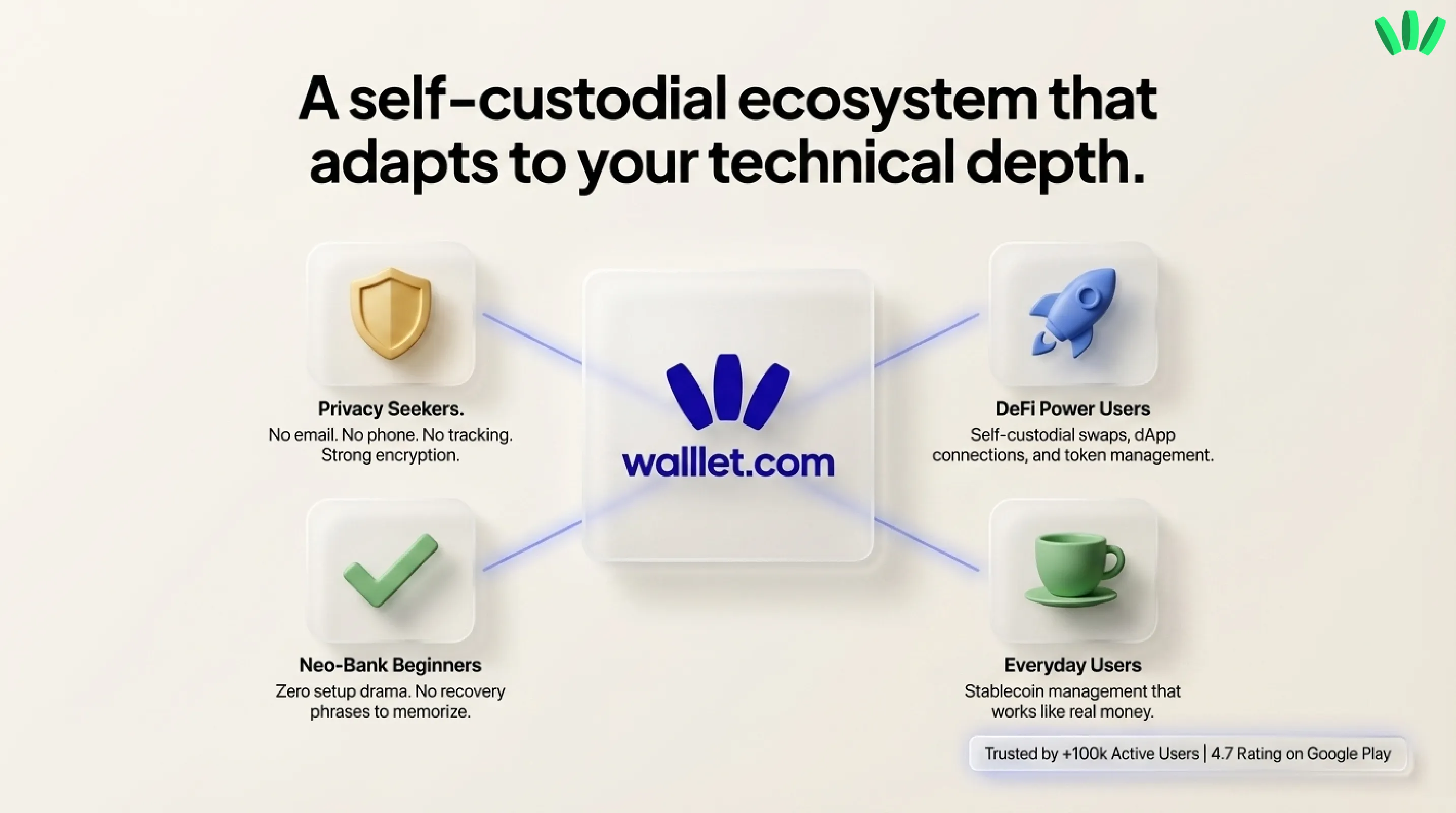
The product’s public positioning leans on a few ideas that stand out.
First, walllet.com is seedless by design. Its terms say it uses passkey-based authentication instead of traditional seed phrases, and the homepage explains that the private key is generated and protected inside the device’s hardware security environment.
Second, it aims to reduce everyday Web3 friction. The homepage highlights that users can pay transaction fees with any token they own on supported flows, rather than getting stuck because they lack the native gas asset.
Third, walllet.com treats readability as part of security. Its homepage emphasizes “activity you can understand,” with transactions shown more clearly instead of forcing users to guess what a prompt means.
Fourth, the privacy posture is meaningfully different from many mainstream apps. The core wallet does not require a name, username, email address, or phone number to use it, and that it does not collect seed phrases, private keys, or passkey credentials from users.
So when someone asks what walllet.com is, the cleanest answer is this: it is a self-custodial crypto wallet trying to make Web3 feel less brittle, less technical, and less hostile from the first tap onward.
What wallet.com is right now
As of April 12, 2026, wallet.com resolves to Google Wallet. Google’s own pages describe Google Wallet as a digital wallet for cards, tickets, passes, keys, and IDs. Its official site focuses on tap to pay, transit, loyalty cards, event tickets, family features, and privacy controls.
That means wallet.com is serving a mainstream consumer payments and passes use case, not a self-custodial crypto wallet use case. Google Wallet’s official materials talk about debit and credit cards, contactless payments, travel, loyalty, and digital identity items. They do not position it as a wallet for seedless self-custody, onchain asset control, or Web3 dapp interaction.
The platform context is different too. Google says Google Wallet is available on Android phones, Wear OS, and Fitbit devices, and the official site says it is only available on Android. So even before you get to crypto, the whole product philosophy is different: this is a mobile wallet for daily consumer use inside Google’s ecosystem.
The biggest difference is not branding. It is custody.
The deepest gap between walllet.com and wallet.com is not the spelling. It is what kind of trust model you are stepping into.
With walllet.com, the public terms say you remain in control of your assets, keys, and credentials, while passkeys and device-backed security replace the usual seed phrase flow. That is self-custody with a redesigned access model.
With wallet.com, you are in the world of Google Wallet, where the focus is storing payment cards and passes for convenient use across Google-supported devices and services. That is a digital consumer wallet, not a blockchain self-custody product.
If you are choosing between them, ask the question this way instead:
Do you want to control crypto assets onchain, connect to Web3, and avoid seed phrase friction? Then you are looking at walllet.com.
or
Do you want to carry payment cards, use tap to pay, store tickets and loyalty cards, or keep your transit pass on your Android phone? Then wallet.com, which currently points to Google Wallet, is the relevant destination.
Why this confusion happens so often
The confusion makes sense. Both names contain “wallet,” both live on clean domains, and both can sound like general-purpose finance tools if you only glance at them for two seconds.
But search behavior around “wallet” is messy. Some people want a crypto wallet. Some want Apple Wallet or Google Wallet. Some want a place to store payment cards. Some want a non-custodial app for tokens, swaps, or DeFi. When a user types walllet.com vs wallet.com, they are often trying to de-risk a click before they install the wrong app or trust the wrong product.
That is exactly why this comparison matters. It is not really a rivalry page. It is a clarification page. And clarity is valuable because the wrong mental model can send a beginner into the wrong ecosystem from the very first step.
walllet.com is built for crypto from the start
walllet.com positions itself around supported blockchain networks, sending and receiving crypto assets, integrated apps, passkey-based access, account abstraction, and self-custodial control. The experience is also shaped around pain points that keep many people from using crypto wallets comfortably: seed phrases, confusing approvals, unclear activity, and gas friction.
That combination matters. Plenty of wallets can claim security. Fewer treat comprehension as part of security. walllet.com’s “activity you can understand” language is not just cosmetic copy. In crypto, clearer prompts and suspicious approval warnings can reduce the kind of preventable mistake that starts with a confused click.
For new or less technical users, that is where walllet.com feels meaningfully different from the older mold. It is still self-custody. It is still your responsibility. But the product is trying to remove unnecessary ceremony rather than asking you to become a wallet operations specialist before you even send your first transaction. The simplest way to remember it is this:
wallet.com is about carrying everyday digital items.
walllet.com is about owning and using crypto with less friction.
If you came here because you want self-custodial Web3 access without seed phrase chaos, walllet.com is the one you meant. Try walllet.com if what you actually want is self-custodial crypto access without seed phrase friction.
