A hot wallet is better for daily crypto use because it stays online and is easy to access. A cold wallet is better for long-term storage because it keeps private keys offline. Many users need both: an active wallet for movement, and cold storage for funds they do not plan to touch often.
TL;DR
A hot wallet is easier for daily crypto use. A cold wallet is better for holding larger amounts for longer.
Most people should not use one wallet for everything.
Keep active funds in an easy wallet, long-term funds in cold storage, and risky app activity away from your main balance.
If seed phrases are the part that makes crypto stressful, a passkey wallet can be a simpler middle ground for active use.
What is a hot wallet?
A hot wallet is a crypto wallet you use on an internet-connected device.
That usually means a mobile wallet, browser extension, desktop wallet, or web wallet. It lets you send crypto, receive tokens, connect to apps, swap assets, and check your balance quickly.
Good for daily use. Also easier to mess up.
Because a hot wallet is online, it is more exposed to phishing, malware, fake websites, risky approvals, and bad signing decisions. That does not make every hot wallet unsafe. It just means your daily wallet should not hold everything you own.
If you are still learning the basics, this guide on the best crypto wallet for beginners is a useful next read.
What is a cold wallet?
A cold wallet keeps your private keys offline.
The most common version is a hardware wallet. It adds friction on purpose. You usually need a physical device, a backup process, and more steps before moving funds.
That friction can be useful when the funds matter.
Cold wallets are better for long-term holdings, larger balances, and crypto you do not need to touch often. They reduce exposure to online attacks, but they still depend on careful setup. Lose the backup, store it badly, approve the wrong thing, buy a compromised device. Problems still happen.
Ethereum’s own wallet security guidance recommends basic habits like never sharing recovery phrases, avoiding screenshots of seed phrases, double-checking transactions, and using hardware wallets where appropriate. Good advice. Boring. Still ignored by enough people to keep scammers employed.
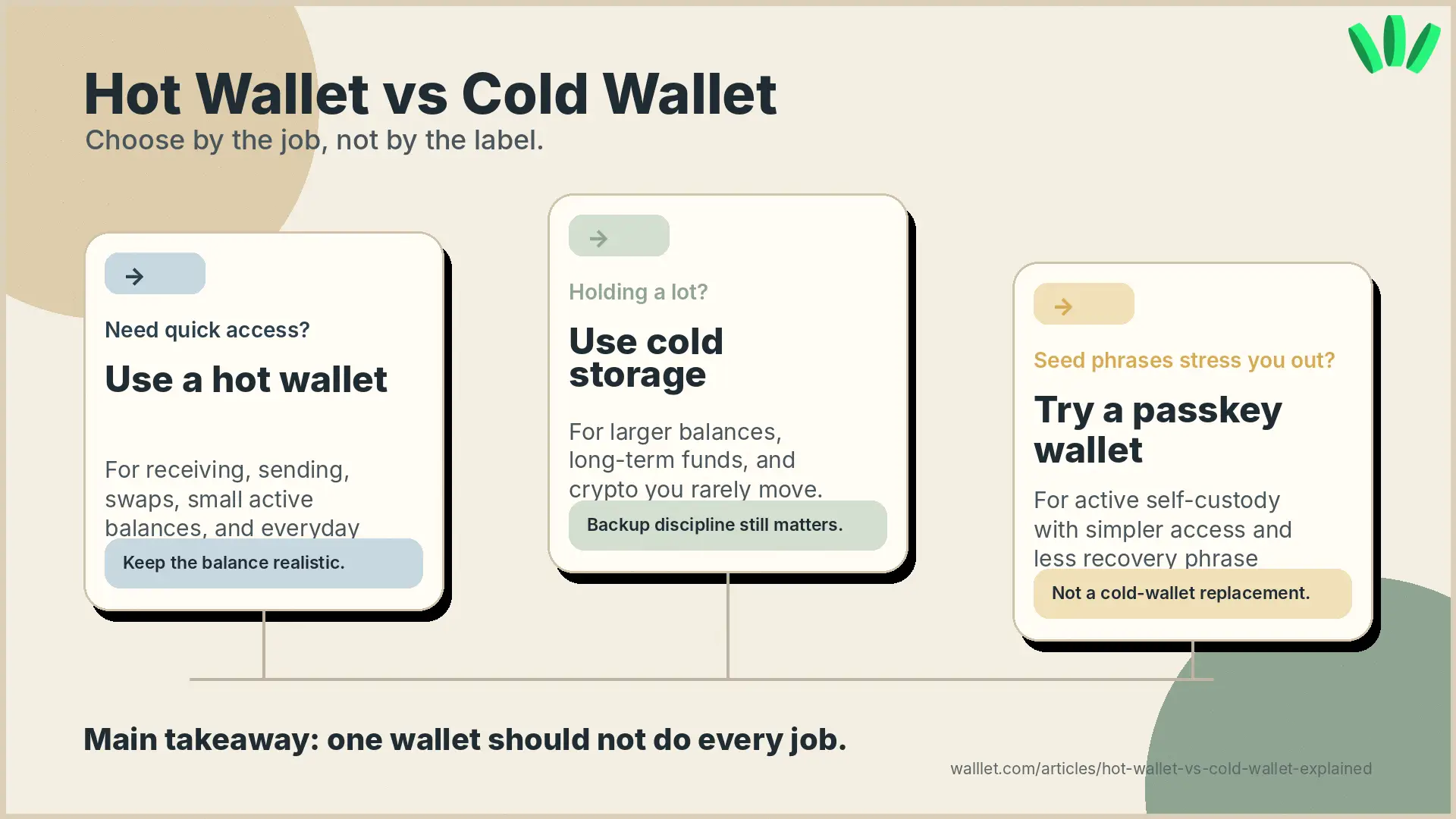
Hot wallet vs cold wallet: what is the difference?
The main difference is online exposure.
Factor | Hot wallet | Cold wallet |
Internet exposure | Used online | Keys kept offline |
Best for | Daily use, small active balances, dApps, swaps | Long-term storage and larger balances |
Main strength | Fast access | Lower exposure to remote online attacks |
Main weakness | More exposed to phishing, malware, and risky approvals | Slower, less convenient, backup discipline required |
Typical form | Mobile app, browser extension, desktop wallet | Hardware wallet or offline setup |
Beginner experience | Easier to start | More setup work |
Best use | Crypto you move | Crypto you hold |
Coinbase also describes hot wallets as software-based wallets usually connected to the internet and cold wallets as offline options used for longer-term storage. Coinbase hot vs cold wallet guide So, simple version:
Hot wallet = easier access.
Cold wallet = more distance from online risk.
Is a cold wallet always safer?
Usually for long-term storage, yes.
For every situation, no.
A cold wallet reduces online exposure. It does not protect you from every bad decision. You can still lose your backup. You can still sign something risky. You can still send funds to the wrong address. You can still get tricked by fake support.
That part nobody likes hearing.
A hot wallet can also be used safely enough for active crypto if you keep the balance small, avoid suspicious links, review approvals, and separate daily activity from savings.
The real risk is often the setup, not just the wallet type.
Where do passkey wallets fit?
A passkey wallet is an active crypto wallet that uses passkeys, often unlocked with Face ID, fingerprint, PIN, or device authentication, instead of asking you to manage a seed phrase manually.
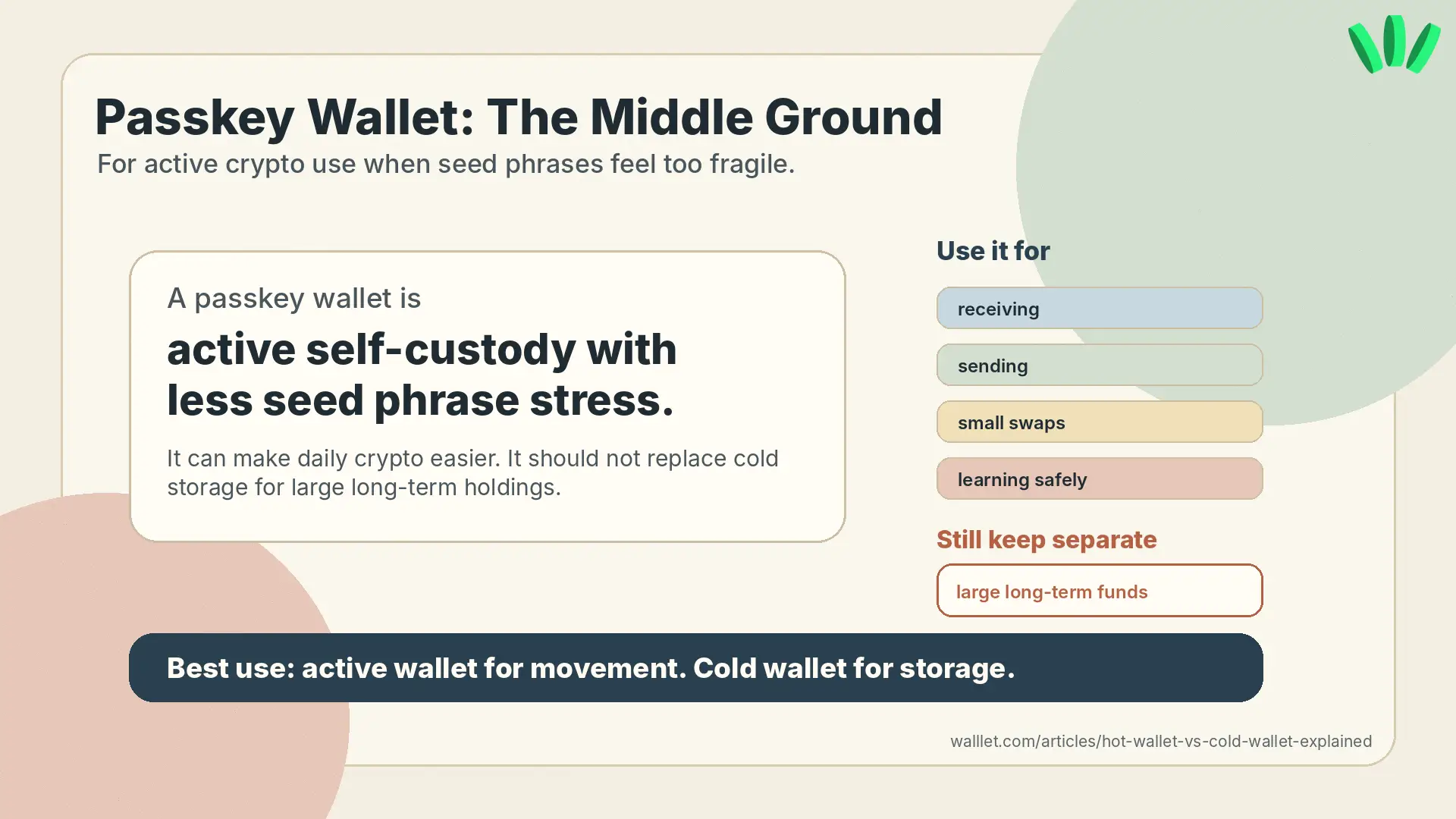
It is still closer to a hot wallet because it is made for active use.
The difference is access.
Traditional wallets often ask users to write down a seed phrase and protect it forever. Powerful, sure. Also stressful. One wrong screenshot, one lost paper, one fake support chat. Suddenly “self-custody” feels like a trap designed by someone who hates normal people.
Passkeys reduce that pressure. FIDO Alliance describes passkeys as password replacements unlocked with the same method people use to unlock their devices, like biometrics or PINs, with phishing-resistant design.
Factor | Traditional hot wallet | Cold wallet | Passkey wallet |
Main use | Daily crypto activity | Long-term storage | Easier active self-custody |
Access model | Often seed phrase based | Usually hardware and backup based | Passkey-based |
Best for | Users comfortable managing wallet risk | Larger long-term holdings | Users who want easier access without seed phrase stress |
Main tradeoff | More exposed to online activity | More friction | Easier access, still active-use risk |
Beginner fit | Good if seed phrases are understood | Can feel heavy | Often easier to start |
A passkey wallet is not cold storage. It is a simpler way to manage active crypto without making seed phrase management the first scary step. For a deeper look at the tradeoffs, read Are Seedless Wallets Safe?
Curious what active self-custody feels like without the seed phrase ritual? See how walllet.com handles it. No need to move anything serious first. Tiny test amounts exist for a reason.
What wallet setup should most people use?
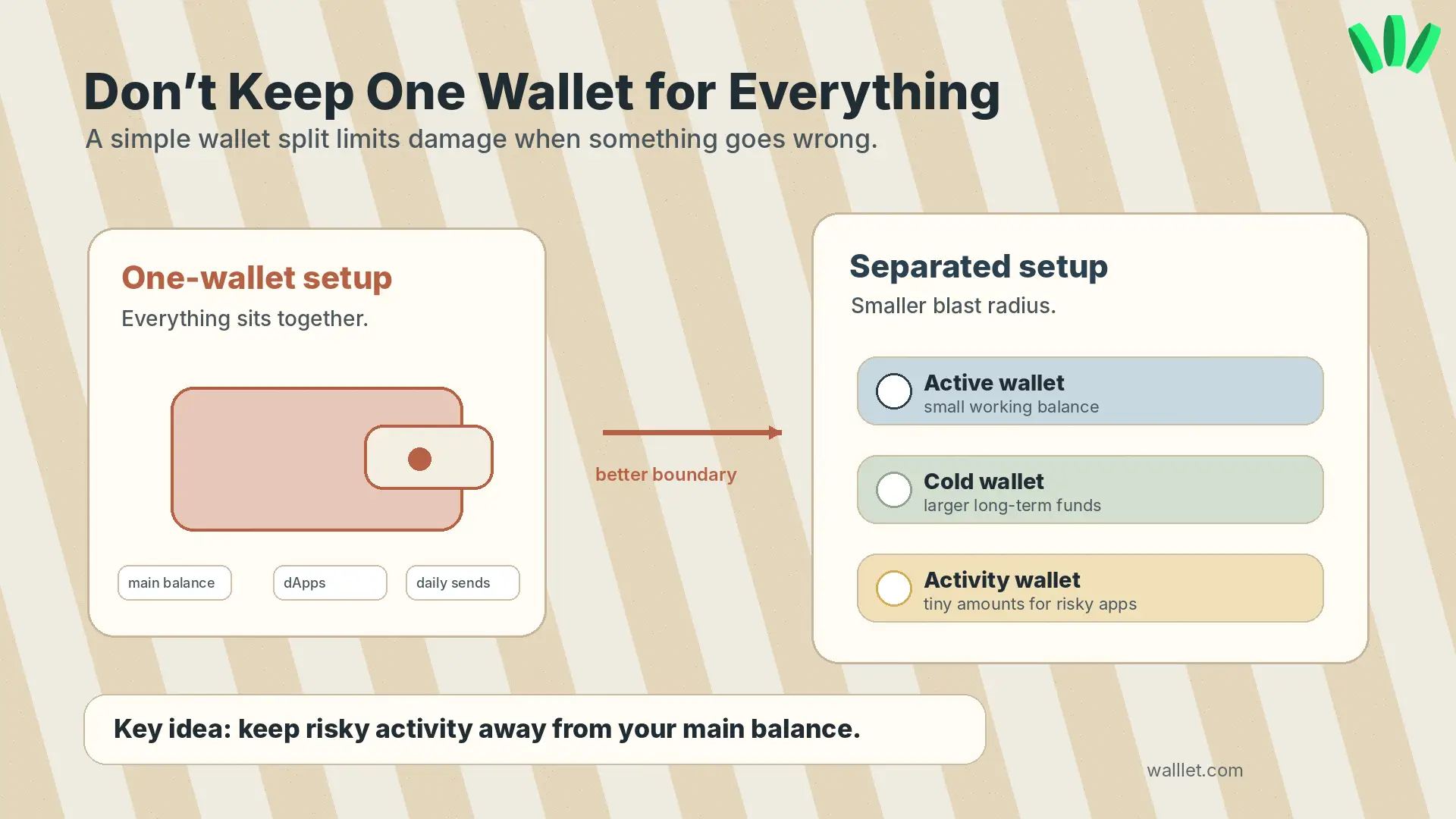
Most people need separation. One wallet for everything sounds simple. Then one bad approval, one fake dApp, one rushed transfer. Suddenly simple becomes expensive. Humanity’s finest UX pattern: convenience first, regret later. A cleaner setup:
Wallet role | What it holds | Why |
Active wallet | Small working balance | For receiving, sending, swaps, and regular use |
Cold wallet | Larger long-term holdings | For funds you rarely move |
Separate activity wallet | Small test amounts | For unfamiliar apps, mints, contracts, or risky interactions |
This setup is useful because it limits damage.
If your active wallet has a problem, your long-term holdings are not sitting there with it. If an app asks for a weird approval, you are not using the wallet that holds your main balance. Basic hygiene. Somehow still revolutionary. For more on this, read How to Keep Your Crypto Safe
Should beginners use a hot wallet, cold wallet, or passkey wallet?
Beginners should start with a wallet they understand.
That matters more than sounding advanced.
Cold storage can be smart, especially once the balance is meaningful. But for a new user, setting up hardware, writing backups, checking networks, and signing transactions can feel like too much at once.
A better path:
Start small. Learn how receiving and sending works. Keep only active funds in the wallet you use often. Add cold storage when the amount becomes painful to lose.
For freelancers or remote workers receiving stablecoins, this is even more practical. Keep money you need to move in an active wallet. Move longer-term savings somewhere more isolated. If you receive USDT or USDC often, this guide to stablecoins like USDC, USDT, and DAI helps explain what you are actually holding.
When does a hot wallet make more sense?
A hot wallet makes sense when you need quick access. Use one when you receive crypto often, send payments, swap small amounts, connect to apps, or manage a working balance from your phone. The important part:
Keep the balance realistic.
A hot wallet should feel useful, not terrifying. If opening the app makes your stomach drop because too much money is sitting there, that is probably a signal. A very obvious one. Naturally, people ignore those.
When does a cold wallet make more sense?
A cold wallet makes sense when the amount matters more than convenience. Use cold storage when the balance is large, long-term, or rarely touched. It is also useful when you want extra friction before moving funds.
That delay can save you from rushed decisions. Still, cold storage needs care. Backups matter. Device source matters. Transaction checks matter. If you treat a cold wallet like a magic shield, you are just moving the risk to a different corner of the room.
Can a seedless wallet help if seed phrases scare you?
Yes, for active crypto use.
This is the question many users actually have. They are not asking for a lecture on wallet categories. They want to know: Can I control my crypto without being one lost paper away from disaster?
That is where walllet.com is relevant.
walllet.com is a self-custodial crypto wallet built for active use without traditional seed phrase stress. It uses passkeys and biometrics to make wallet access feel more familiar, and clearer transaction prompts to help users understand what they are approving before they sign.
That does not make it a cold wallet. It makes it a practical active wallet for people who want control, but do not want crypto to feel like a security exam every time they open the app. A sensible setup could look like this:
Use walllet.com for active crypto you receive, send, or use. Keep larger long-term holdings in cold storage. Use a separate wallet for risky app interactions. Test everything with a small amount first. Small tests are underrated. Mostly because they are sensible, and sensible things rarely get enough applause.
Hot wallet vs cold wallet vs passkey wallet: which one should you choose?
Choose based on the job.
Your situation | Better choice |
You receive or send crypto often | Hot wallet or passkey wallet |
You hold a meaningful balance long term | Cold wallet |
Seed phrases make you nervous | Passkey wallet |
You connect to unfamiliar apps | Separate activity wallet |
You are brand new | Start with small amounts in an easy active wallet |
You already hold a large amount | Add cold storage |
You want one wallet for everything | Please do not |
No perfect setup. Just better boundaries.
Hot wallet for movement. Cold wallet for storage. Passkey wallet when you want active self-custody with less seed phrase anxiety.
Still a bit messy. Crypto enjoys being like that. Ready to test a simpler active wallet setup? Create a seedless wallet with walllet.com, start with a small transfer, and keep long-term funds separate.
